
Focused arrival windows
Useful updates and clear arrival timing.
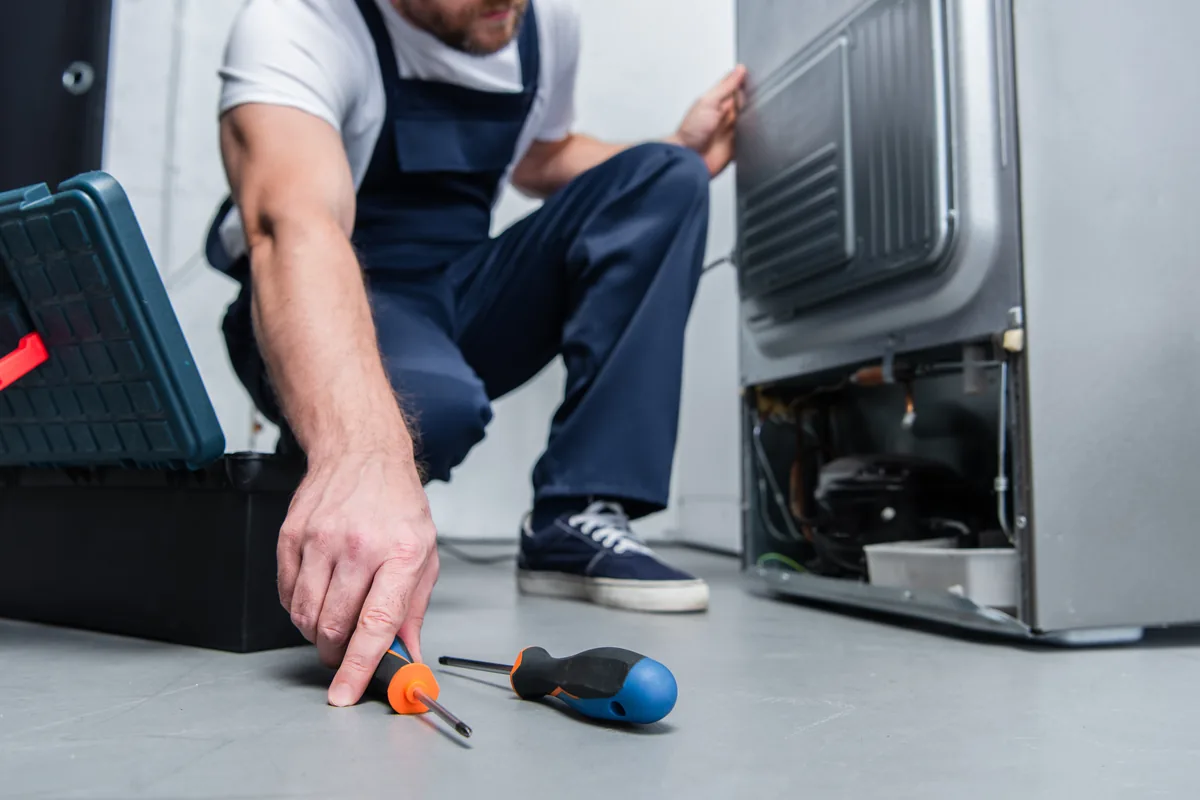
Fridge clicking every few minutes, running hot, or warm while the lights and fan still work? The cause is not always the compressor. A start relay or capacitor costs far less to fix, and we test those first. If the compressor or sealed system has failed, we give you an honest repair-or-replace number before you spend anything.
Useful updates and clear arrival timing.
Review the approach and price before deciding.
Equipped vehicles and respectful cleanup.
Neighbors serving neighbors with follow-through.
The compressor is the most expensive part of a refrigerator, so we prove it has failed before we quote it. Most no-cooling calls end in a smaller fix.
We test the start relay, overload protector and start capacitor. These are small, cheap parts that can stop a healthy compressor from starting.
We check whether the compressor receives power, draws normal current and runs, and whether it is overheating or locked up.
We look for signs of a refrigerant leak or blockage. Sealed-system work involves regulated refrigerant and is quoted separately from simple repairs.
You get the repair price, the likely cost of a comparable new fridge, and our honest view based on the age and condition of yours.
Tell us what is happening and get a clear next step from the local team.
The compressor is the pump in a refrigerator’s sealed system. It circulates refrigerant so heat is moved out of the fridge. When it fails, the fridge warms up even if the lights, the display and the fans still work. But a fridge that will not start is often a start relay, an overload protector or a capacitor, not the compressor itself.
That difference is about money. A relay or capacitor repair is typically a small job, while a compressor or sealed-system repair can approach the price of a new fridge. A leaking sealed system usually means replacement. So the first job is to find out which of these you have.
Unplug the fridge before touching any electrical part. Our noisy compressor guide explains what each sound means.
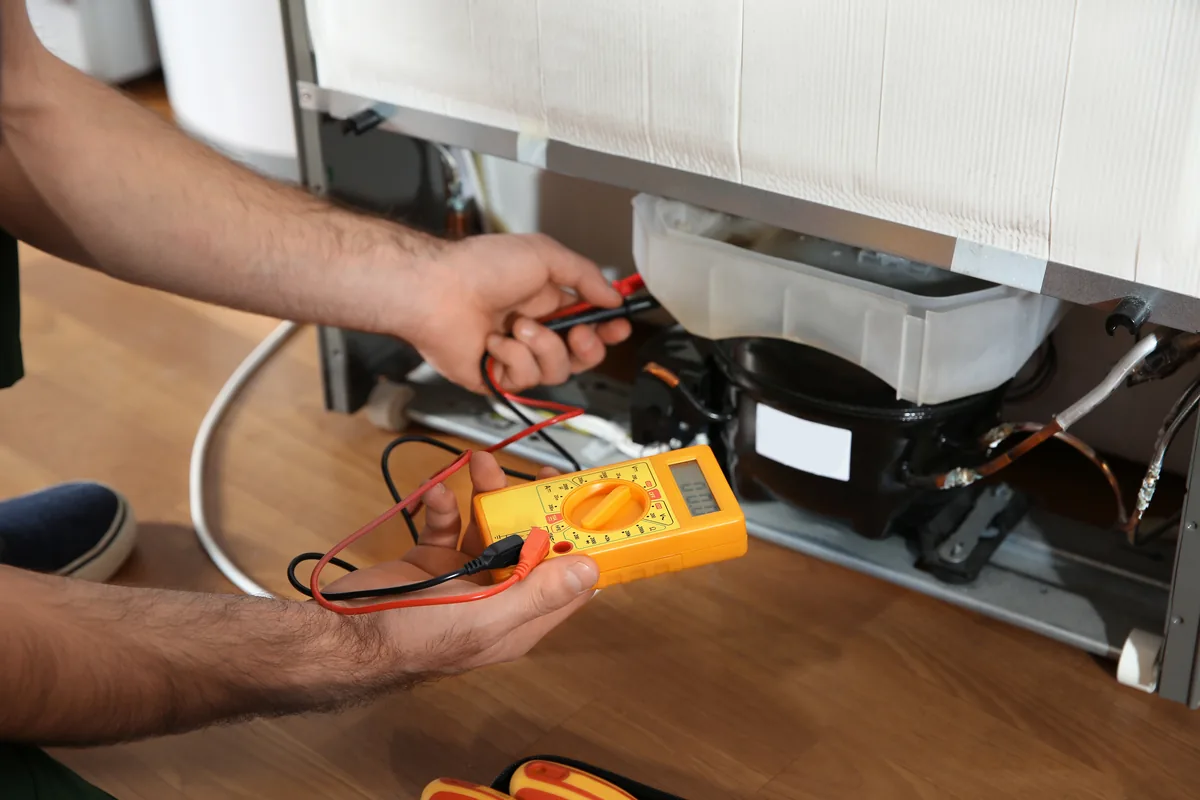
Match what you hear and feel to the usual cause. The cheapest explanation is tested first.
| What you see | Usual cause | First check | Typical fix |
|---|---|---|---|
| Clicks every few minutes, no cooling | Failed start relay, overload protector or capacitor | Listen at the back; note how often it clicks | Replace the relay or capacitor |
| Lights and fans work, nothing cools | Compressor not starting, or a sealed-system problem | Check the bottom rear for heat | Test relay, then compressor and sealed system |
| Compressor runs non-stop, weak cooling | Dirty coils, failed condenser fan, or low refrigerant | Clean the coils; check the fan at the back | Coil or fan service; leak check |
| Loud hum, knocking or rattle | Worn compressor mount, failing fan or an internal compressor fault | Check levelling and loose panels | Fix mounts or fan; assess compressor |
| Hot to the touch, shuts off often | Overload protector tripping from overheating | Check airflow and the room temperature | Clean and cool; test the overload |
| Fridge died after a storm or surge | Relay, capacitor or control board damaged by a surge | Unplug for 5 to 10 minutes and restart | Replace the damaged part |
| Oily residue or hissing at the back | Possible refrigerant leak in the sealed system | Do not run it for long; call | Usually replacement; we quote both |
| Burning smell | Overheating motor or electrical fault | Switch the fridge off | Test and replace the failed part |
On the call we ask the make and model, the age, whether the fridge clicks or hums, and whether the fans and lights work.
We check power, the start relay, overload and capacitor, plus fans and coils, before we condemn the compressor.
If those pass, we test the compressor windings and look for signs of a leak or blockage.
You hear the repair price, a rough price for a comparable new fridge and our recommendation. A second opinion on a high quote is reasonable.
If you go ahead, we repair or replace the part and confirm the fridge is cooling. We explain what to watch for over the next day.
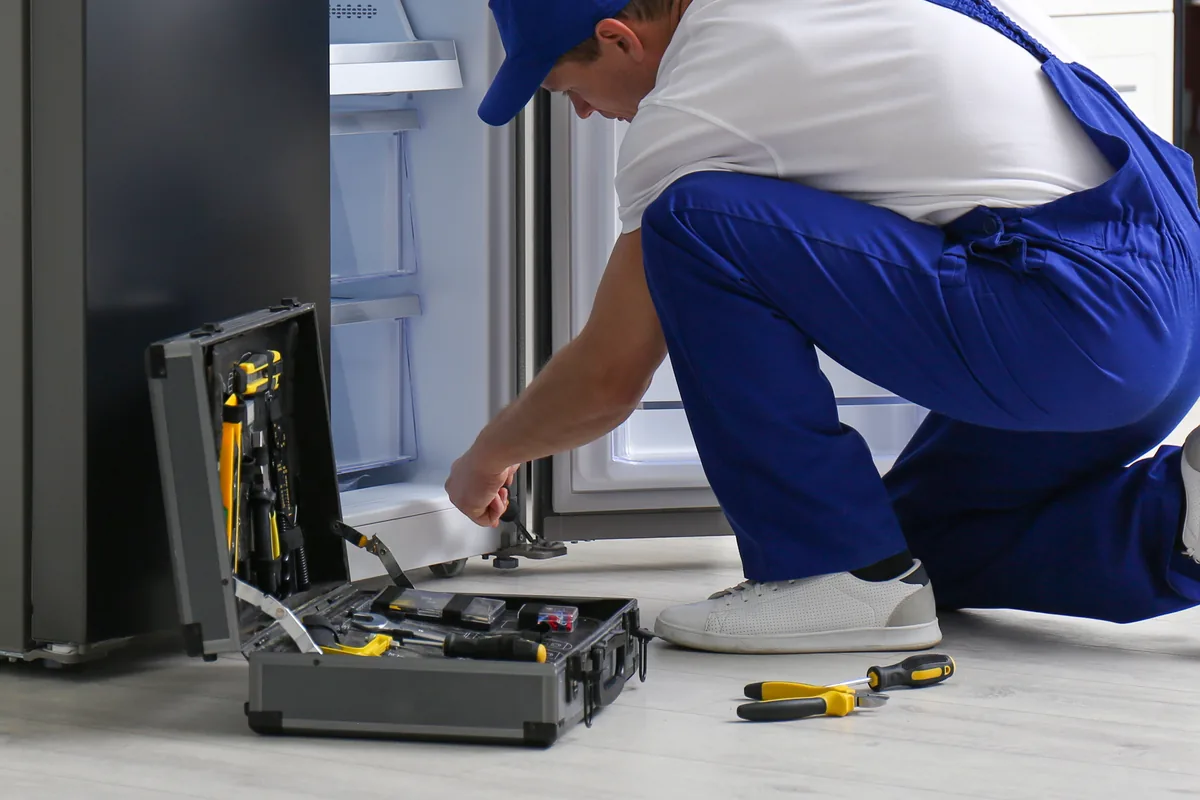
Checks the compressor windings and whether it draws normal current.
Confirms whether the small start parts have failed before we quote bigger repairs.
Shows how far the fridge has fallen from 40°F and 0°F, and how fast.
Relays, overload protectors and capacitors for the major brands, so many starting faults finish in one visit.
This tool is crucial for safely handling refrigerants during repairs.
We adhere to EPA Section 608 regulations during all repairs, ensuring environmental safety.
Our technicians use advanced diagnostic testing methods to accurately identify compressor issues.
After repairs, we conduct thorough quality control checks to ensure optimal performance.
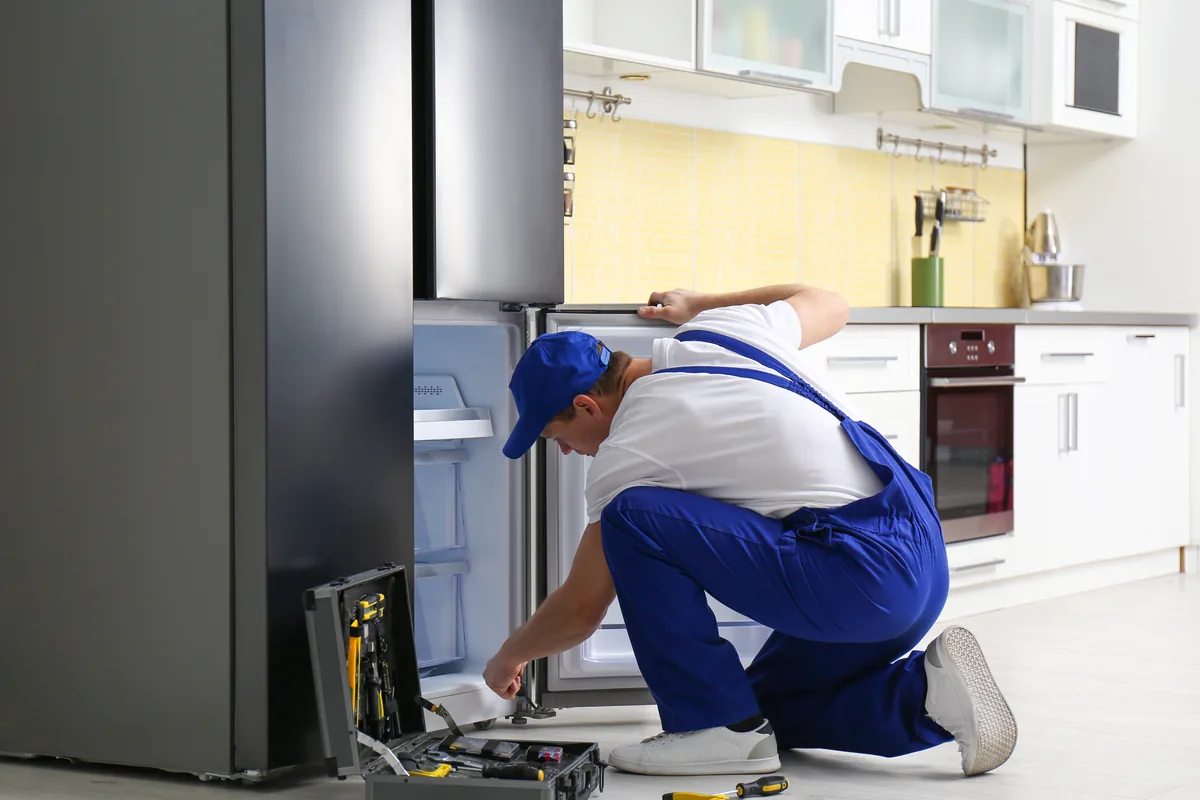
This is the classic start-relay symptom, and relays are cheap. A quick diagnosis can save you from replacing a fridge that only needs a small part.
Surges often damage the relay or control board. Unplug it for 5 to 10 minutes, restart it, and call us if it still will not cool, before the food is lost.
A compressor or sealed-system quote can approach the price of a new fridge. A second diagnosis tells you whether that number is right and whether replacing is smarter.
Heat, dust, salt and storms all load a compressor more here than in a cooler climate. These are the local reasons we look at its surroundings as well.
Average highs reach about 91°F from June to September. A hot kitchen makes the compressor run longer, which adds wear and heat.
Some standard refrigerator manuals limit the room to roughly 55°F to 110°F, so a garage fridge in August can run non-stop. Garage-rated models are designed for about 38°F to 110°F.
Dust and pet hair on the condenser coils force the compressor to run hot. A coil clean often restores cooling without any compressor repair.
Near the Gulf, salt and moisture corrode coils and fittings, which shortens equipment life. Coastal fridges benefit from a yearly coil clean.
Surges damage relays, capacitors and boards, and every restart after an outage stresses the compressor. A surge protector made for appliances helps.
A family in Fort Myers faced a major issue with their refrigerator not cooling at all, leading to spoiled food.
After our repair, the fridge was cooling efficiently again, maintaining a consistent temperature of 37°F.
Maintenance: Regular maintenance checks every six months helped prevent future issues.
A homeowner reported strange rattling noises coming from the fridge, indicating potential compressor failure.
Post-repair, the fridge operated quietly, with no unusual sounds, ensuring peace of mind.
Maintenance: Routine inspections can help catch issues early and prolong appliance life.
A refrigerator was cycling on and off frequently, causing concern about energy waste.
After our intervention, the compressor operated smoothly without excessive cycling, saving energy and costs.
Maintenance: Keeping coils clean and ensuring proper airflow can enhance efficiency.
These are the compressor-related faults we are called about most, with the usual cause behind each.
A relay or overload that cannot start the compressor. We replace the small part first and test the compressor if that fails.
The cooling circuit is not working. We separate start parts, the compressor and the sealed system.
Dirty coils, a failed fan or a worn compressor. We cool it down, find the cause and fix that.
A loose mount, a failing fan or an internal fault. Some noises are normal; a loud constant one is not.
An overload protector that keeps cutting out points to overheating or a failing compressor. We test both.
A relay, capacitor or board damaged by a surge is a smaller repair than the compressor itself.
$100 - $450 depending on scope
Prices here vary widely, so we say it plainly. A relay or capacitor repair often falls within $100 to $450. A compressor or sealed-system repair can cost $500 to $1,000 or more and is often near the price of a new fridge. You get a clear quote before any work begins, and we tell you honestly when replacing makes more sense.
A relay or capacitor is a small repair. A compressor or a leaking sealed system is a major one. This is why we test in order.
Repair is usually worth considering on a fridge under about 8 years old. Past 10 years, a compressor repair rarely makes sense unless the fridge is high-end.
If the repair costs more than half of a comparable new fridge and the unit is over about 8 to 10 years old, replacing is usually better.
A built-in or panel-ready fridge costs far more to replace, so an expensive repair can still be the better value.
For a high sealed-system quote, a second opinion is reasonable. We will say if we think replacing is smarter.
When comparing companies, ask whether the diagnostic fee is credited toward the repair, and whether parts and labor are in the quote.
| Job | Typical range | What it depends on |
|---|---|---|
| Start relay, overload or capacitor | $100 to $300 | Part and model |
| Compressor or sealed-system repair | $500 to $1,000+ | Brand, age and whether a leak must be fixed |
| Main control board (if that is the cause) | $500 to $1,000 | Brand and model |
General US market estimates from published cost guides (Fixr, Liberty Home Guard and others), not a Fridge Masters quote. Replacement figures vary by brand. Our quote comes after we diagnose your fridge.
With 12 years of experience in the industry, our team is highly trained to handle all aspects of refrigerator compressor repair. We hold certifications such as NATE Certification and are compliant with Florida State License requirements.

I had a fantastic experience with the refrigerator compressor repair. The team was quick, professional, and my fridge is running like new again!
Their emergency refrigerator repair service saved my business. They arrived within hours and fixed the compressor efficiently. Highly recommend!
The technicians were knowledgeable and explained everything. My fridge has never worked better since their compressor repair!
Common signs are a fridge that is warm while the lights and fans work, a compressor that is very hot or runs constantly, and loud humming or knocking. Clicking every few minutes often means the start relay, not the compressor. A technician can test the relay and compressor to tell which.
The click is usually the start relay or overload protector trying and failing to start the compressor. A relay is cheap and worth replacing first. If a new relay does not help, the compressor itself may have seized, and we will explain the options.
Published guides put compressor replacement at roughly $500 to $1,000 or more, with labor the largest share. Relay and capacitor repairs are far cheaper. Our quote comes after we diagnose, and we tell you when replacing the fridge makes more sense.
Usually only if the fridge is under about 8 years old, high-end or built-in, and the repair costs less than half of a comparable new unit. On an older fridge, replacing it is normally the better value. We give you both numbers.
The compressor, or a leak in the sealed system, is the most expensive repair. That is why we test the start relay, capacitor and fans first, because those are common causes that cost much less.
Only after the leak is found and fixed, and refrigerant handling is regulated, so it is not a do-it-yourself job. The leak is usually the expensive part, so a recharge quote on its own can be misleading. We tell you the full cost.
Yes, for a high sealed-system quote it is reasonable. Ask what was tested, whether the relay and capacitor were ruled out and what a comparable new fridge costs. We are happy to diagnose it for a fresh view.
Some LG models have been widely reported for early compressor failure. Check your warranty and any manufacturer extended coverage before you pay. We can diagnose it and explain the repair-or-replace numbers for your model.
Dirty coils, a failed fan, poor airflow around the fridge or a hot room are the usual causes. The overload protector cuts the compressor out when it overheats. Clean the coils and give the fridge space, and call us if it keeps happening.
Often not. Surges commonly damage the relay, capacitor or control board. Unplug the fridge for 5 to 10 minutes, restart it, and call us if it stays warm. Replacing a small part is far cheaper than a compressor.
It adds load. Long summers above 90°F, hot garages, dusty coils and salt air near the coast all make a compressor work harder. Cleaning the coils each year and giving the fridge airflow are the cheapest ways to protect it.
A closed refrigerator keeps food cold for about 4 hours, and a full freezer holds about 48 hours. Discard perishables that were above 40°F for more than 2 hours. Move food to a cooler with ice if the repair will take longer.
Yes. We diagnose and repair refrigerator compressors across Fort Myers and nearby areas, including Cape Coral, Estero, Lehigh Acres and Fort Myers Beach. Give us the make, the model and what the fridge is doing when you call.
The usual causes are a failed start relay, a weak start capacitor, a tripped overload, low voltage or a compressor that has seized. Listen for a click every few minutes, which points to the relay or overload. A silent, dead compressor with power at the fridge points to the board or the compressor itself. We test the cheap parts first.
That is a classic sign of a weak start capacitor, a failing overload or a compressor winding that is breaking down with heat. When the compressor is cold it starts, and when it heats up it cannot restart until it cools. It can also point to a restriction. It is worth testing the start parts before condemning the compressor, but a heat-related failure often means the compressor is on its way out.
Yes. The overload protects the compressor, and the capacitor helps it start. A failed overload or a weak capacitor can stop the compressor starting, so the fridge warms while the fans and lights still work. Both are small, cheap parts, and they are tested together with the relay. They are often the real cause of a fridge that is blamed on its compressor.
Yes. Without airflow over the condenser coils, the compressor cannot shed heat, so it gets hot and trips on its overload, which makes the fridge cycle off and on and warm up. Repeated overheating wears the compressor out. Replacing a condenser fan early is much cheaper than a compressor, so a hot bottom rear is a reason to call.
Yes, and it is very common. The evaporator fan moves cold air from the freezer into the fridge. If it fails, the freezer stays cold, the fridge warms and you may hear no fan at all. Look for frost, because ice can also jam the fan. Replacing the motor and clearing the cause usually fixes it.
Yes. With too little refrigerant, the system cannot absorb enough heat. Early on, cooling just weakens and the compressor runs constantly. Later, the fridge stops cooling at all, and frost forms on only part of the evaporator. A leak needs finding and fixing before refrigerant is added, and it is often a major repair on an older fridge.
Refrigerant is not used up. If it is low, it is leaking, usually from a corroded evaporator or condenser, a damaged line or a joint. Adding more without fixing the leak is a short-term fix at best, and refrigerant handling is regulated. We find the leak, price the repair honestly, and tell you if replacing the fridge is smarter.
Compressors burn out for a reason. Low voltage or surges, a dead condenser fan or dirty coils making it overheat, a restricted system, moisture or contamination in the sealed system and repeated hard starts from a bad relay are the usual causes. Replacing the compressor without fixing the cause means it fails again. That is why we test the whole system, not just the compressor.
Short cycling usually points to the overload tripping, a weak start relay or capacitor, an overheating compressor, a dirty condenser or a fault in the sealed system. Listen for a click followed by silence. Clean the coils, check the condenser fan and give the fridge air space. If it keeps starting and stopping, call us.
Straight answers to what Fort Myers homeowners ask about refrigerator compressors. Not seeing your question? Call and ask.
Ask the local team
A control or sensor fault can stop the compressor from starting or shutting off.
View service
A failed condenser fan makes the compressor overheat and shut off.
View service
Frost and defrost faults that can mimic a failing compressor.
View serviceRelays, capacitors and other parts we replace when a compressor is not the problem.
View service
We're here to assist you with any fridge repair needs. Our team responds promptly to inquiries and is available for service.


