
Focused arrival windows
Useful updates and clear arrival timing.
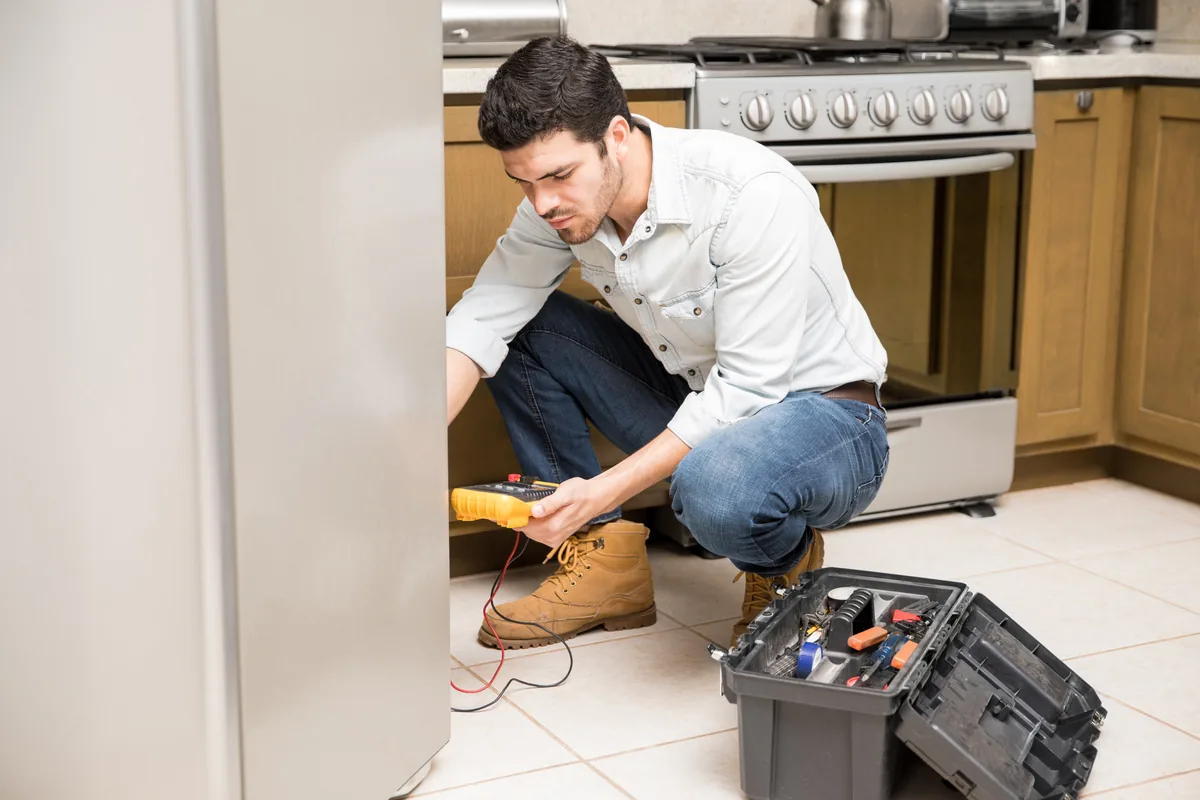
Fridge too warm, or freezing your lettuce? The thermostat or temperature sensor tells the compressor when to run, so when it drifts or fails the whole fridge goes wrong. We test the control and the sensor, rule out the look-alike causes first, and replace a part only when it is the real fault. You get the price before any work begins.
Useful updates and clear arrival timing.
Review the approach and price before deciding.
Equipped vehicles and respectful cleanup.
Neighbors serving neighbors with follow-through.
A warm or over-cold fridge is not always the thermostat. We check the simple causes first so you do not pay for a part you did not need.
We measure fridge and freezer temperatures with a thermometer, not the dial, and compare them with the 40°F and 0°F food-safety targets.
We test the cold control or the electronic temperature sensor against its expected readings, and check the wiring and the connection to the control board.
Blocked vents, a leaking door seal, a stuck air damper, dirty coils or a failing fan can all mimic a bad thermostat. We check them before we replace anything.
If the thermostat or sensor is at fault, we replace it, set it correctly and confirm the temperatures settle over the next day.
Tell us what is happening and get a clear next step from the local team.
A refrigerator thermostat, or on newer fridges an electronic temperature sensor, tells the compressor when to start and stop. Older units use a mechanical cold control with a bimetal strip that bends with temperature. Newer ones use a thermistor that reports to a control board. Either can drift out of range or stop working, and then the fridge runs too warm, freezes food, or runs without a break.
The catch is that several other faults look the same. A fridge that is warm while the freezer is cold is often a fan or damper problem, and a fridge that runs constantly is often dirty coils or a worn door seal. Replacing a thermostat that was fine wastes money, so we test it and tell you what we find.
Unplug the fridge before you touch any electrical part. Our temperature guide explains the right settings for a fridge and freezer.

Match what you see to the usual cause. If the first check does not solve it, a technician can test the thermostat and sensor properly.
| What you see | Usual cause | First check | Typical fix |
|---|---|---|---|
| Fridge warm, compressor runs constantly | Dirty coils, leaking door seal, failing fan, or a sensor reading wrongly | Clean the coils; try the dollar-bill test | Seal, fan or coil service; sensor if it tests bad |
| Fridge warm, compressor never starts or clicks | Failed start relay or compressor, or a control that is not calling for cooling | Listen for a click every few minutes | Relay or control test; see compressor repair |
| Food freezing in the fridge section | Failed temperature sensor or stuck air damper sending too much cold air | Move food away from the back wall vent | Replace the sensor or damper |
| Dial changes make no difference | Worn mechanical thermostat or a control board fault | Move the dial a notch and wait 24 hours | Replace the thermostat or board part |
| Temperature swings up and down | Drifting thermostat, blocked vents or overloaded shelves | Thermometer reading morning and evening | Recalibrate or replace the control |
| Display shows a wrong temperature or an error | Sensor fault or control board fault | Note the code; unplug for 5 to 10 minutes | Test and replace the sensor or board |
| Fridge warm but freezer cold | Usually a failed evaporator fan, a blocked damper or a defrost fault, not the thermostat | Check for frost on the freezer back wall | Fan or defrost repair |
| Water or sweat on the doors and walls | Worn gasket letting humid air in | Wipe the gasket; dollar-bill test | Door seal replacement |
On the call we ask the make and model, whether the fridge is too warm or too cold, and what a thermometer reads. It helps us bring the likely part.
We check real temperatures, then the seal, vents, coils, fans and damper, so we know the thermostat is the problem before we replace it.
We test the thermostat or sensor and its wiring, and look at the control board if it is an electronic model.
You hear the cause, the part and the price first. If you approve, we replace the part and set the temperatures.
We confirm the temperatures are heading to the right range and explain that a fridge can take up to a day to settle after a repair.
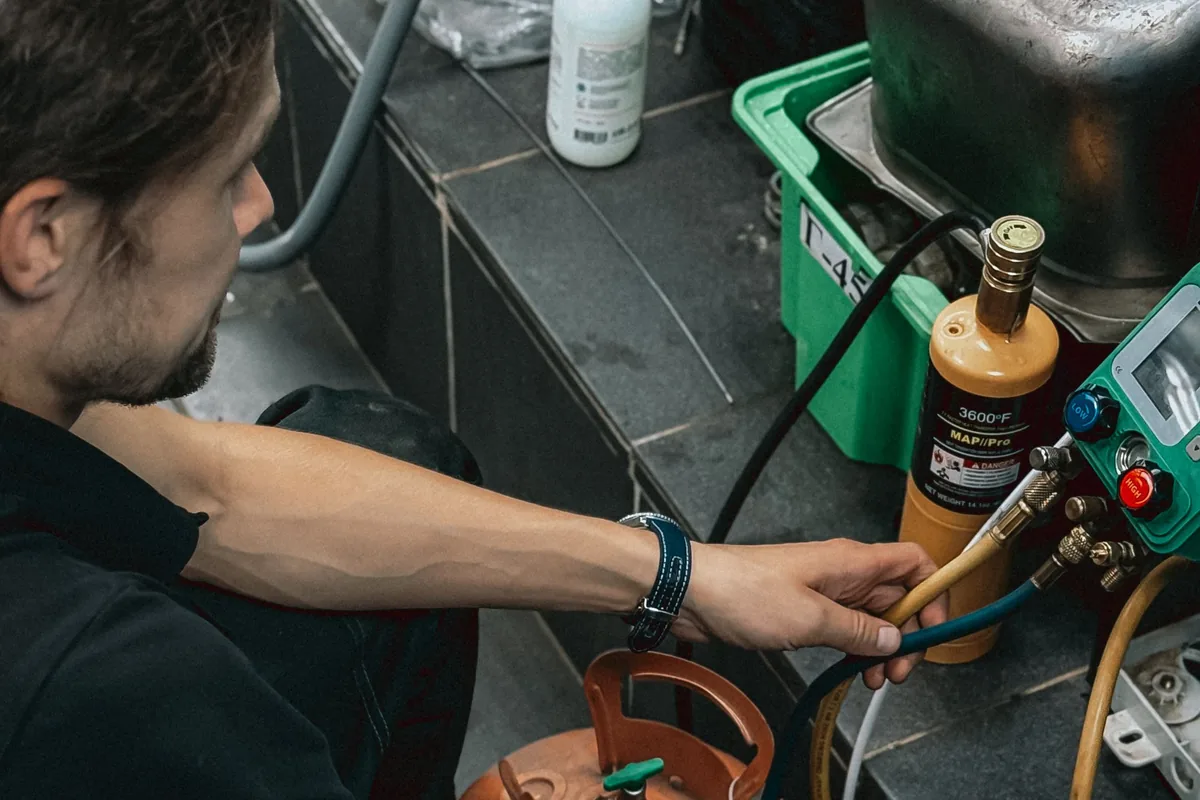
Shows the real temperature, because the dial rarely does. Food safety targets are 40°F or below and 0°F.
Tests cold controls, sensors and wiring for continuity and the correct resistance.
We confirm vents, damper and fans are moving cold air before blaming the control.
Cold controls and temperature sensors for the major brands, so many fixes finish in one visit.
We perform thorough diagnostic testing to pinpoint thermostat issues accurately.
All repairs are conducted in compliance with EPA Section 608 regulations to ensure environmental safety.
After repairs, we calibrate the thermostat to ensure it maintains the correct temperature.

Milk souring in days, or lettuce frozen solid, points to a control or sensor that is wrong. Check the air damper and vents first, then call if it keeps happening.
A control that no longer responds is a classic sign of a worn thermostat or a failing board. Wait 24 hours after the last change, then call.
Swings from warm to cold usually mean a drifting control or blocked airflow. A clean thermometer log over two days helps us find it quickly.
Heat, humidity and storms push a fridge control harder here. These are the local reasons we test the thermostat and its surroundings together.
Average highs reach about 91°F from June to September. A hot kitchen or garage makes the compressor run longer, and a control that is drifting then looks like it is failing.
Some standard refrigerator manuals limit the room to roughly 55°F to 110°F. A garage fridge in August can run constantly, and no thermostat setting fixes that.
Electronic controls and temperature sensors can be damaged by a surge. After a storm, unplug the fridge for 5 to 10 minutes, restart it, and call us if it will not hold temperature.
Moist air gets in through a worn gasket, adds load and makes the fridge seem too warm. We check the seal before we replace a control.
Near the Gulf, salt air can corrode connectors and wiring behind the control. A check for corroded terminals is part of testing a coastal fridge.
Before our service, the refrigerator fluctuated between 40°F and 60°F, causing food spoilage.
After the repair, the fridge maintained a consistent temperature of 37°F, ensuring food safety.
Maintenance: Regular checks every six months can help maintain this stability.
The refrigerator emitted loud clicking noises, indicating a failing thermostat.
Post-repair, the fridge operates quietly, enhancing kitchen comfort.
Maintenance: Keep the area around the fridge clear for optimal airflow.
High energy bills were a concern due to an inefficient thermostat.
After our service, the energy consumption decreased by 25%, reflecting in lower bills.
Maintenance: Regular maintenance checks can help sustain energy efficiency.
These are the temperature-control faults we are called about most.
A sensor that reads cold when it is not, or a control that no longer calls for cooling, leaves food warm. We test it before blaming the compressor.
A control or sensor that sends too much cold air freezes lettuce and drinks. A stuck damper can do the same.
A control that does not shut off the compressor wastes energy and shortens its life. We check for dirty coils and a bad seal as well.
A control that does not call for cooling, or a failed relay, can leave the fridge silent. We separate the two.
A faulty thermistor reports the wrong reading. The fridge may be fine, or running badly, and only a thermometer shows which.
A worn mechanical control or a board fault means the settings no longer change the temperature.
$100 - $450 depending on scope
Most thermostat and temperature-sensor repairs in Fort Myers sit in the lower half of $100 to $450, because the part itself is small and the job is usually one visit. If the real fault is a main control board, a fan or the compressor, the price follows that repair instead. You get a clear quote before any work begins.
A basic mechanical cold control costs less than an electronic sensor, and a control board costs more than either.
Some models use a specific sensor or board that costs more to source. Your model number lets us check before we arrive.
We may find a worn seal or a blocked vent instead. That is a different, often cheaper, repair, and we tell you honestly.
On a fridge under about 10 years old, a thermostat repair is usually worth doing. On an older one with other problems, we compare with replacement.
If the fault is on the main control board or the compressor, see our compressor repair page, because those jobs cost more.
When comparing companies, ask whether the diagnostic fee is credited toward the repair, and whether parts and labor are in the quote.
| Job | Typical range | What it depends on |
|---|---|---|
| Mechanical thermostat (cold control) | $100 to $260 | Part cost and how easy it is to reach |
| Temperature sensor (thermistor) | $100 to $200 | Model and whether the board must be checked |
| Main control board | $500 to $1,000 | Brand and model; only when the board is the cause |
General US market estimates from published cost guides (Fixr, EasyBear), not a Fridge Masters quote. Our quote comes after we diagnose your fridge.

With 12 years of experience in refrigerator thermostat repair, our team is equipped to handle various brands and models, including Whirlpool, LG, and Frigidaire. We are NATE Certified and adhere to EPA standards, ensuring high-quality service.

I had issues with my fridge not cooling properly. The team responded quickly and fixed the thermostat in no time. Highly recommend their services!
Their prompt service saved me from losing inventory. They diagnosed and repaired my refrigerator's thermostat efficiently. Excellent work!
I was impressed with the professionalism and speed of the repair. My fridge is working perfectly again, thanks to their expert team!
Common signs are a fridge that is too warm or freezes food, a compressor that runs constantly or never starts, and a dial that no longer changes the temperature. Because a seal, vent or fan can cause the same symptoms, check those first and use a thermometer. If none is the cause, call us to test the control.
Most thermostat and temperature-sensor replacements in Fort Myers fall within $100 to $450, usually in the lower half. A mechanical cold control costs less than an electronic sensor, and a main control board costs far more. You get a quote before any work begins.
A failed temperature sensor, a thermostat stuck on, or a stuck air damper can send too much cold air into the fridge. Move food away from the back vent, set the dial to the middle and wait 24 hours. If it keeps freezing, the sensor or damper needs replacing.
The FDA says to keep the refrigerator at 40°F or below and the freezer at 0°F. Many technicians aim for 35°F to 40°F in the fridge. Use a freestanding thermometer, because most dials do not show the real temperature.
Usually not. That pattern most often means a failed evaporator fan, a blocked damper or a defrost fault, which stops cold air reaching the fridge section. Check for frost on the freezer back wall. A technician can tell the difference in one visit.
Dirty condenser coils, a leaking door seal, a hot room or a failing fan are the usual causes. A thermostat that does not shut the compressor off can also do it. Clean the coils, try the dollar-bill test, and call us if it still runs constantly.
Allow about 24 hours after any change before judging it, because the contents have to cool down too. Changing the dial again and again hides the real problem. Change it one notch at a time and check with a thermometer.
Some people do, but it means unplugging the fridge, reaching inside the control housing and testing the part, and a wrong diagnosis wastes the part. If you try it, unplug the fridge first. Many sensors are cheap, but a seal or fan fault is more likely than a bad thermostat.
Put a thermometer in the fridge to see the real temperature. If the display is wrong but the fridge is cold, the sensor or board may be at fault. Note any error code, unplug the fridge for 5 to 10 minutes, restart it and call us if the reading stays wrong.
It can. Electronic controls and sensors can be damaged by a surge. After an outage, unplug the fridge for 5 to 10 minutes and restart it. If it will not hold temperature or the display is wrong, call us before food is lost.
Usually yes if the fridge is under about 10 years old and the repair is a thermostat or sensor, because the cost is small. If the repair would cost more than half of a new fridge, or the fridge has other faults, replacing may be better. We tell you honestly.
Yes. A fridge in a hot room runs longer and can seem to be failing when the thermostat is fine. Some manuals limit the room to roughly 55°F to 110°F, so a hot Florida garage is outside the range. A garage-rated fridge is designed for it.
Yes. We repair refrigerator temperature controls across Fort Myers and nearby areas, including Cape Coral, Estero, Lehigh Acres and Bonita Springs. Give us the make, the model and the symptom when you call, and we check parts before the visit.
Straight answers to what Fort Myers homeowners ask about fridge thermostats. Not seeing your question? Call and ask.
Ask the local teamCalibration and settings when the thermostat is fine but the temperature is wrong.
View service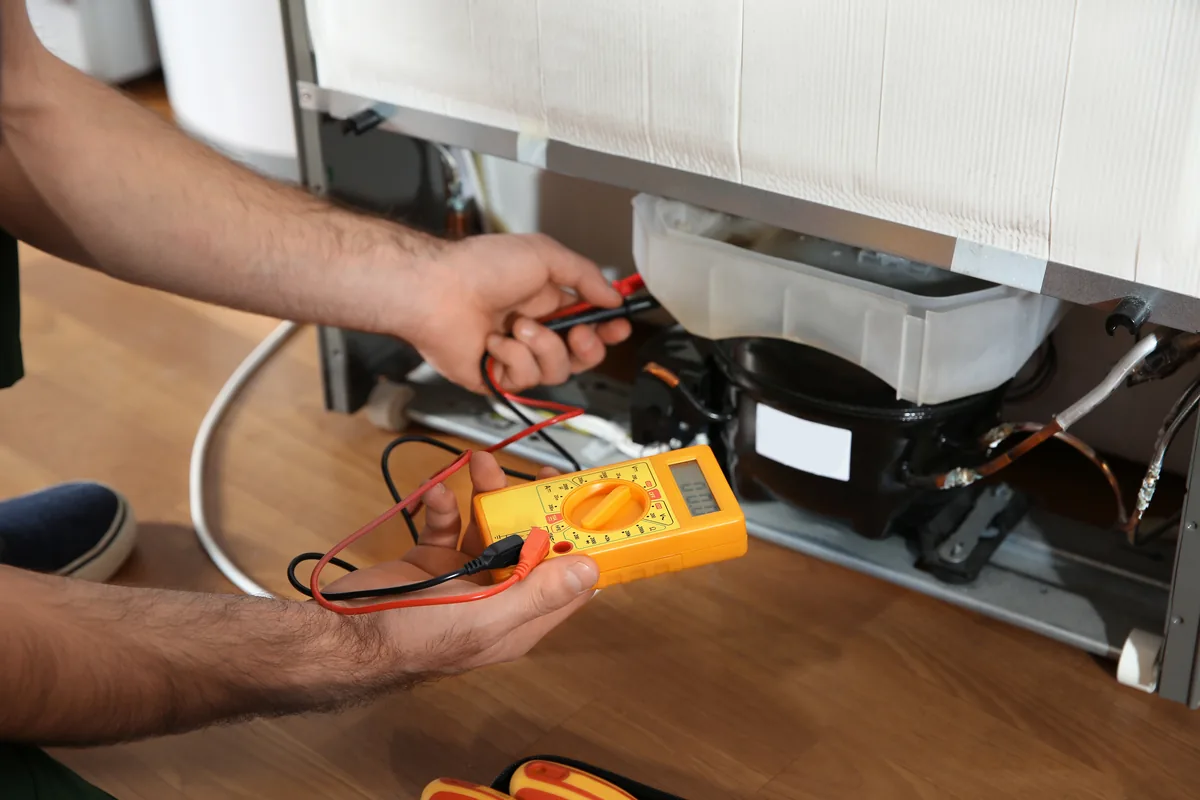
When a warm fridge points to the compressor, relay or sealed system.
View service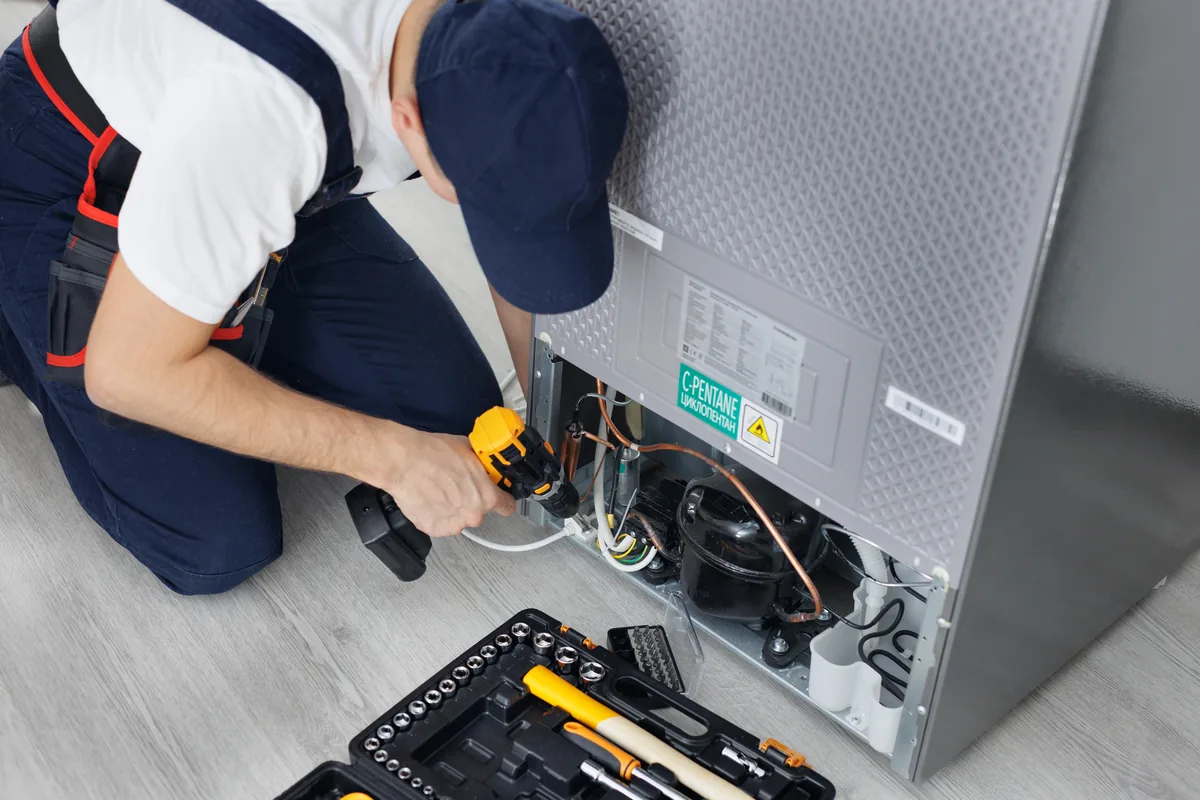
A failed fan is a common look-alike for a bad thermostat.
View service
A leaking door seal makes the fridge run warm and non-stop.
View service
We're here to assist you with any fridge repair needs. Our team responds promptly to inquiries and is available for service.


