
Focused arrival windows
Useful updates and clear arrival timing.

Not sure what is wrong with your fridge, or been given a quote you do not trust? A proper diagnosis tests the likely causes in order, from the simple to the expensive, and tells you what has failed, what it will cost and whether it is worth fixing. You hear the findings and the price before any repair begins.
Useful updates and clear arrival timing.
Review the approach and price before deciding.
Equipped vehicles and respectful cleanup.
Neighbors serving neighbors with follow-through.
The aim is a clear answer: what failed, what it costs and what your options are. We test; we do not guess.
We start with what you saw and heard: when it started, any noises, smells or codes, and what changed. Good questions often point to the cause before any tool is used.
We measure real temperatures, check power, airflow, door seals, fans, the defrost system, controls and sensors, and test the compressor circuit last. Cheap, common causes are ruled out first.
You hear what failed and why, with the repair price and the options, including when replacing the fridge is the better choice.
We leave a simple summary of what we found and what we recommend, which you can keep or share with a landlord or insurer.
Tell us what is happening and get a clear next step from the local team.
Many fridge faults look alike. A warm fridge could be a fan, a defrost fault, a dirty coil, a worn seal, a relay or a compressor. Repair guides list well over a dozen possible causes of a fridge that will not cool, from no power and an overloaded fridge to thermistors, relays, capacitors and a failing compressor. A diagnosis works through them in a sensible order.
That order saves money. A relay or a dirty coil is a small fix, while a compressor can approach the price of a new fridge. Replacing parts on a guess can cost more than the diagnosis itself. A good diagnosis finds the failed part once, and tells you honestly if the repair is not worth doing.
Unplug the fridge before touching any electrical part. Our common problems guide covers what you can check yourself.
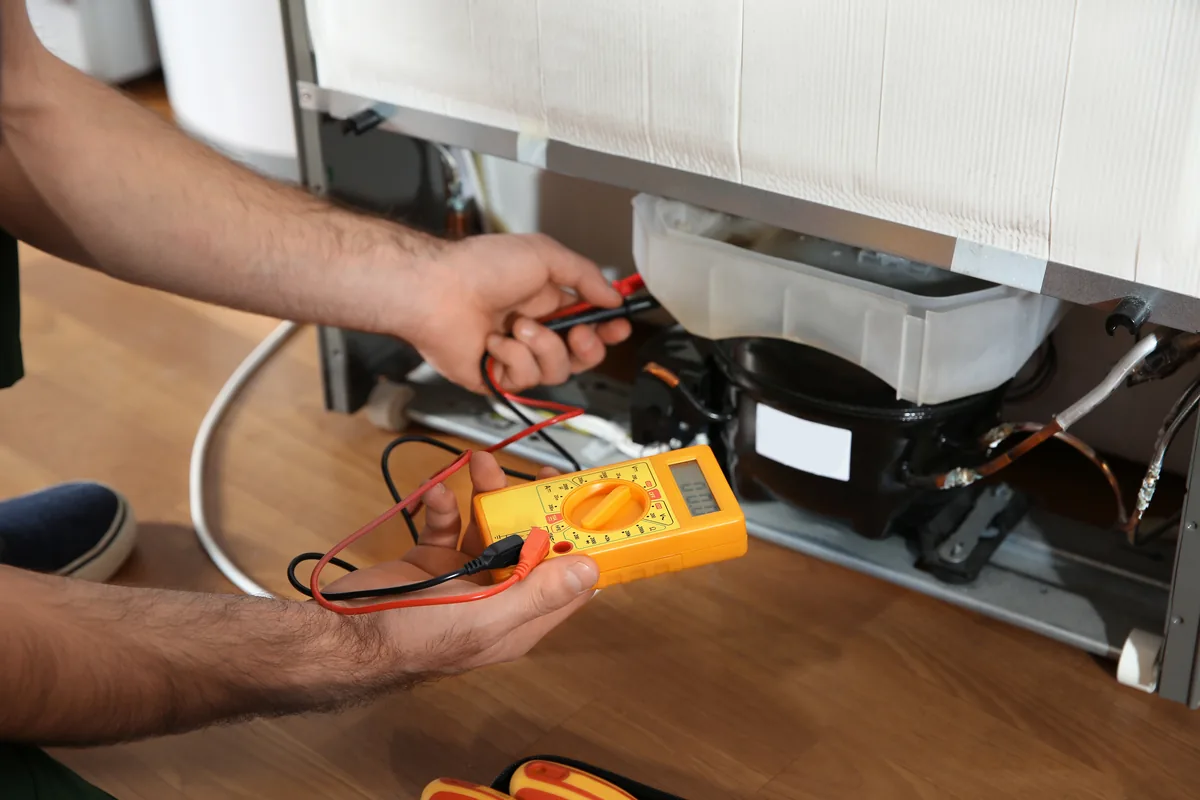
Match your symptom to where we look first. Cheap, common causes come before expensive ones.
| What you see | Usual cause | First check | Typical fix |
|---|---|---|---|
| Fridge warm, freezer cold | Airflow: evaporator fan, damper, frost | Fan running, frost on the back wall, vents | Fan, defrost or damper repair |
| Fridge not cooling at all, lights on | Cooling circuit: start relay, capacitor, compressor | Click or hum; relay and capacitor tests | Relay or capacitor; compressor if proven |
| Fridge runs all the time | Heat load: coils, door seal, fan, thermostat | Coils, dollar-bill test, condenser fan | Coil clean, seal, fan or control |
| Water inside or under the fridge | Defrost drain, supply line, inlet valve | Drain at the freezer floor; line and connections | Clear the drain; replace the line or valve |
| Thick frost in the freezer | Defrost system: heater, sensor, timer | Continuity of the heater and sensor | Replace the failed defrost part |
| Strange noise | Fan, compressor mount or ice | Locate the noise; check for ice on the fan | Fan, mount or defrost repair |
| Dead after a storm or surge | Relay, capacitor, board, power supply | Power at the outlet and the board; relay test | Replace the damaged part |
| Food freezing in the fridge | Temperature control: sensor, damper | Real temperature; damper and sensor test | Sensor or damper replacement |
On the call we ask the make, model and age, what the fridge is doing and what changed. Photos of any labels, leaks or frost help.
We check power, the settings and the real temperatures, so we know how far the fridge has drifted.
We work from the simple causes to the complex: seals, airflow, fans, the defrost system, controls and sensors, then the compressor circuit.
You hear what failed, the repair price and your options, including repairing, replacing or getting a second opinion.
We leave a short written summary and repair only what you approve. If you decide not to repair, you still have a clear answer.
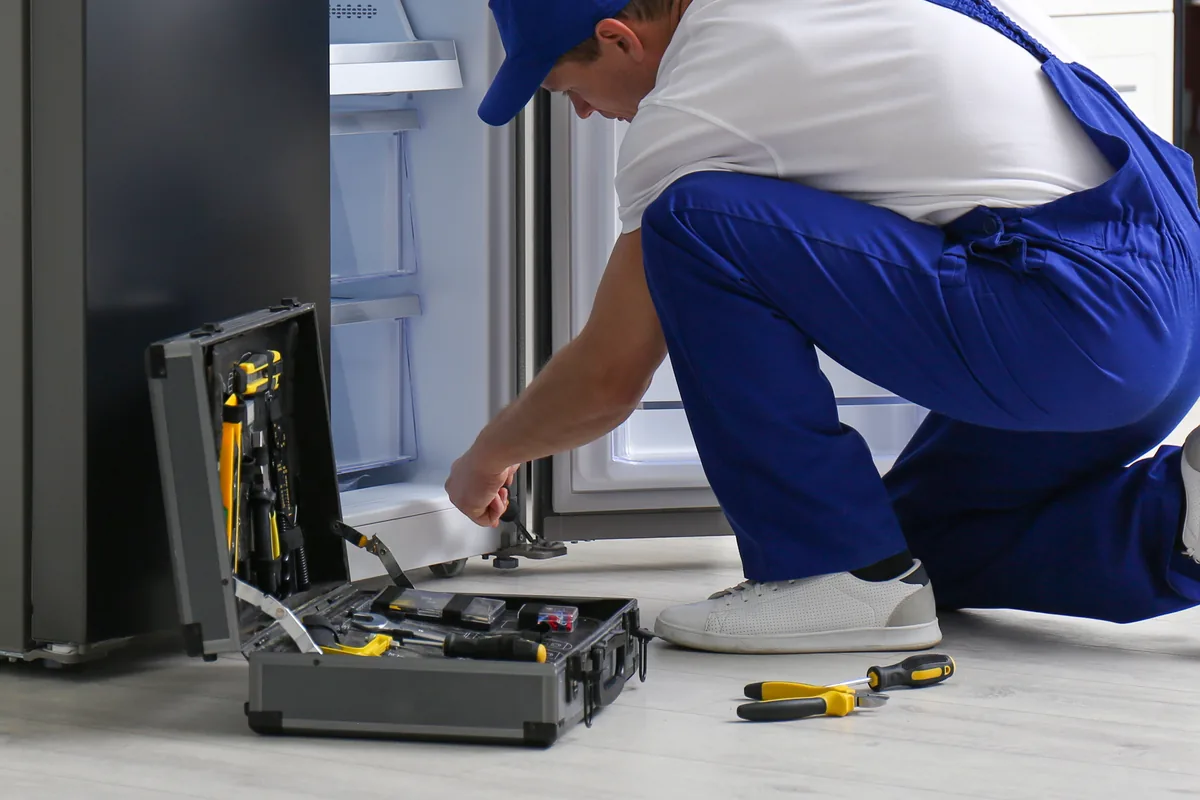
Show the real temperatures, which the dial rarely does.
Tests relays, capacitors, heaters, sensors, fans and the compressor circuit to prove what has failed.
We confirm cold air reaches the fridge and the defrost drain is clear.
Common parts for the major brands, so a simple fault can often be fixed at the visit, if you approve.
Our technicians follow EPA guidelines for refrigerant handling, ensuring safe and responsible service.
We adhere to industry standards set by NATE, ensuring high-quality diagnostics and repairs.
We employ systematic testing procedures to accurately diagnose refrigerator issues, ensuring effective solutions.

A fridge that is warm, noisy, leaking or running constantly can have many causes. A diagnosis finds the right one before you spend money.
A high quote for a compressor or sealed system is worth a second look. We test it and give you a fresh view.
We give you the failed part, the repair cost and an honest view of the fridge’s age and condition to help you decide.
Local conditions put particular stress on fridges. These are the local factors we include in a diagnosis.
Average highs reach about 91°F from June to September. A fridge in a hot kitchen or garage works hard, and we look for heat-related causes first.
Humid air leaks in through worn gaskets and builds frost and sweat. We always check the seals.
After a storm, relays, capacitors and boards are common casualties. We test those before we blame the compressor.
Near the coast, salt corrodes connectors and coils. We check them on coastal fridges.
Some standard manuals limit the room to roughly 55°F to 110°F. A garage fridge may be outside its design range, which affects how we read the symptoms.
The refrigerator was unable to maintain a consistent temperature, causing food to spoil.
After diagnostics and repairs, the fridge now maintains a steady temperature of 37°F, ensuring food safety.
Maintenance: Regular checks on the thermostat and seals help maintain optimal performance.
Frost buildup was obstructing airflow, leading to inefficient cooling.
With repairs, the frost issue is resolved, and cooling efficiency has improved by 25%.
Maintenance: Routine cleaning of coils and checking door seals can prevent future buildup.
The refrigerator was making loud, disruptive noises during operation.
After identifying and replacing a faulty fan motor, the fridge now operates quietly and efficiently.
Maintenance: Regular inspections can help catch potential noise issues early.
These are the questions a diagnosis answers.
We test until we know, and tell you in plain English what has failed and why.
We give you the repair price, the age and condition and an honest recommendation.
We test the part and tell you whether it really is the cause, and whether the price is reasonable.
We look for the underlying cause, such as ice, dust or a leaking seal, not just the symptom.
We check the real temperature and tell you what is safe, using FDA and USDA guidance.
You leave with a clear next step, whether it is a repair, a replacement or no action.
Quoted by the visit, after a call
A diagnostic visit is quoted by the visit, and we explain how our visit fee works when you book. Published guides put a typical diagnostic or service-call fee at roughly $70 to $130, often credited toward the repair if you proceed, but policies differ, so ask any company. The repair itself is quoted after the diagnosis, and most repairs fall within $100 to $450.
Many companies credit the diagnostic fee toward the repair. Ask any company about its policy before you book.
A single clear fault is quick. A fridge with several symptoms takes longer to separate.
French door, built-in and smart models have more controls and take more time to test.
Coils, fans and drains behind panels take longer to reach on some models.
The diagnosis tells you the repair price. A relay or gasket is small, and a compressor or board is major.
When comparing companies, ask whether the diagnosis includes a written summary and whether parts and labor are in the quote.
| Job | Typical range | What it depends on |
|---|---|---|
| Diagnostic or service-call fee | $70 to $130 | Company policy; often credited toward the repair |
| Most repairs after diagnosis | $100 to $450 | The part that failed |
| Compressor or sealed-system repair | $500 to $1,000+ | Often near the price of a new fridge |
General US market estimates from published cost guides (Fixr and others), not a Fridge Masters quote. We explain our own visit fee when you book.

With 12 years of experience since our founding in 2014, our technicians are skilled in diagnosing and repairing all types of refrigerators. We hold certifications such as EPA Section 608 and NATE Certification, ensuring we meet industry standards.
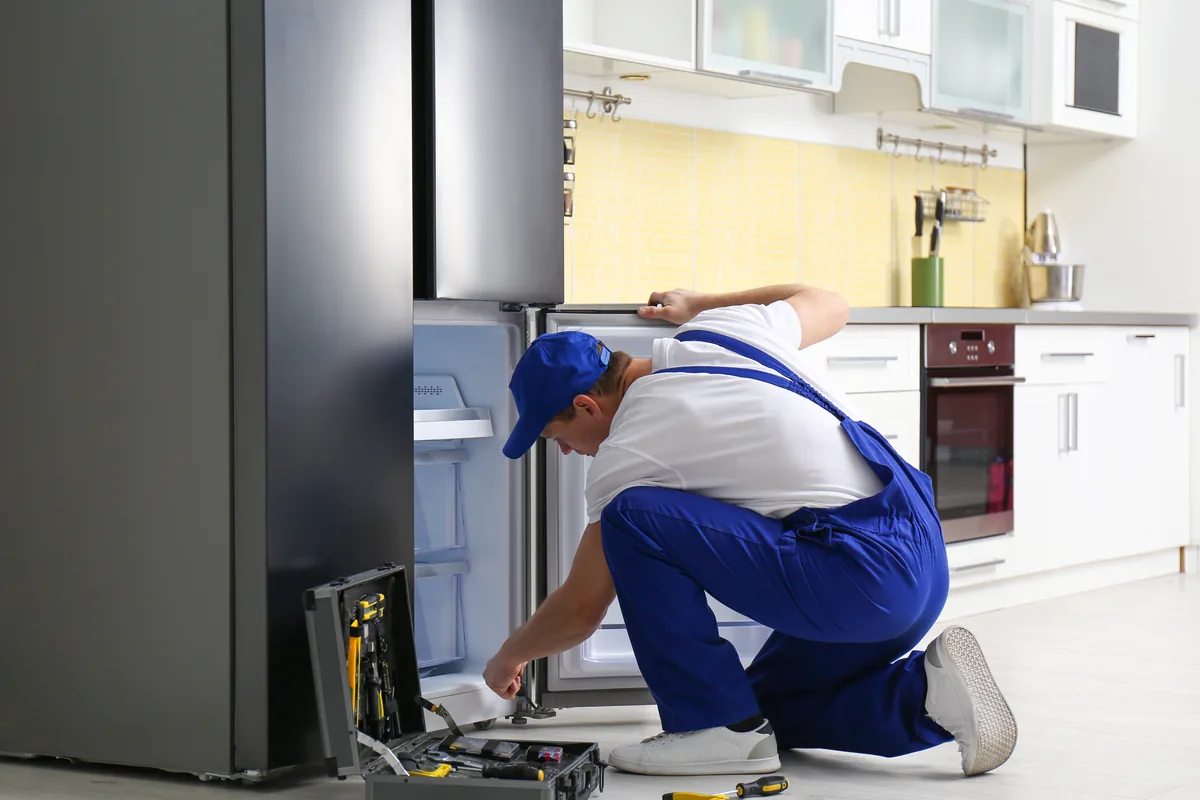
I called for Refrigerator Diagnostic Services and was impressed with their quick response. They diagnosed my fridge issue and had it fixed within hours!
The team was professional and thorough. My fridge is running perfectly now after their diagnostics and repairs. Highly recommend!
I appreciated their honesty and expertise. They explained the issues clearly and resolved everything efficiently. Great service!
It is a set of tests to find out what has failed. A technician asks about the symptoms, measures real temperatures, checks power, airflow, seals, fans, the defrost system, controls and sensors, and finally the compressor circuit. You then get the findings, the repair price and the options.
Because many faults look alike. A warm fridge can be a fan, a defrost fault, dirty coils, a seal, a relay or a compressor. Replacing a part on a guess can waste money, and the real fault stays. A diagnosis finds the failed part once.
Published guides put a typical diagnostic or service-call fee at roughly $70 to $130, and it is often credited toward the repair if you proceed. Policies differ by company. We explain how our visit fee works when you book, and you hear the repair price before any work begins.
Many companies credit it, but not all. Ask any company before you book. We explain how our visit fee works when you call, and you always hear the repair price before we start.
The common checks run from simple to complex: power, settings, an overloaded fridge, door seals, dirty coils, the level, fans, the thermistor and controls, then the start relay, overload and capacitor, then the compressor and sealed system. We stop when we find the cause.
Yes. A second diagnosis is reasonable, especially for a high compressor or sealed-system quote. Tell us what you were told, and we test it and give you our own findings and options.
It depends on the fridge and the fault. A clear problem such as a failed fan can be found quickly, and an intermittent one takes longer. We do not rush it, because a wrong diagnosis costs you money. We tell you what we have found as we go.
Keep the doors shut so the food stays cold, or move perishables to a cooler. Write down the make, model and serial number from the label inside, and note what the fridge is doing and what a thermometer reads. Clear a path to the fridge.
Often yes, if the fridge is still near 40°F. Discard perishables that were above 40°F for more than 2 hours. A closed fridge keeps food cold for about 4 hours, and a full freezer holds about 48 hours. We check the temperature and advise.
Yes. If the repair costs more than half of a comparable new fridge, or the fridge is old and has other faults, we say so. You decide, with the real numbers in front of you.
Yes, though they take patience. A fridge that fails only sometimes may need a log of temperatures and symptoms. Note when it happens, and what changed, and we use it to find the pattern.
They add factors. Heat makes marginal parts fail, humidity leaks in through seals, surges leave electronic faults, and salt corrodes connectors. We include those in the diagnosis, because they are a common reason a fridge fails here.
Yes. We diagnose refrigerators across Fort Myers and nearby areas, including Cape Coral, Estero, Lehigh Acres and Bonita Springs. Give us the make, the model and what the fridge is doing when you call.
Straight answers to what Fort Myers homeowners ask about refrigerator diagnostics. Not seeing your question? Call and ask.
Ask the local teamReplacing the part the diagnosis found.
View serviceRelay, capacitor and compressor tests when the fridge will not cool.
View service
Frost and defrost faults that cause a warm fridge.
View service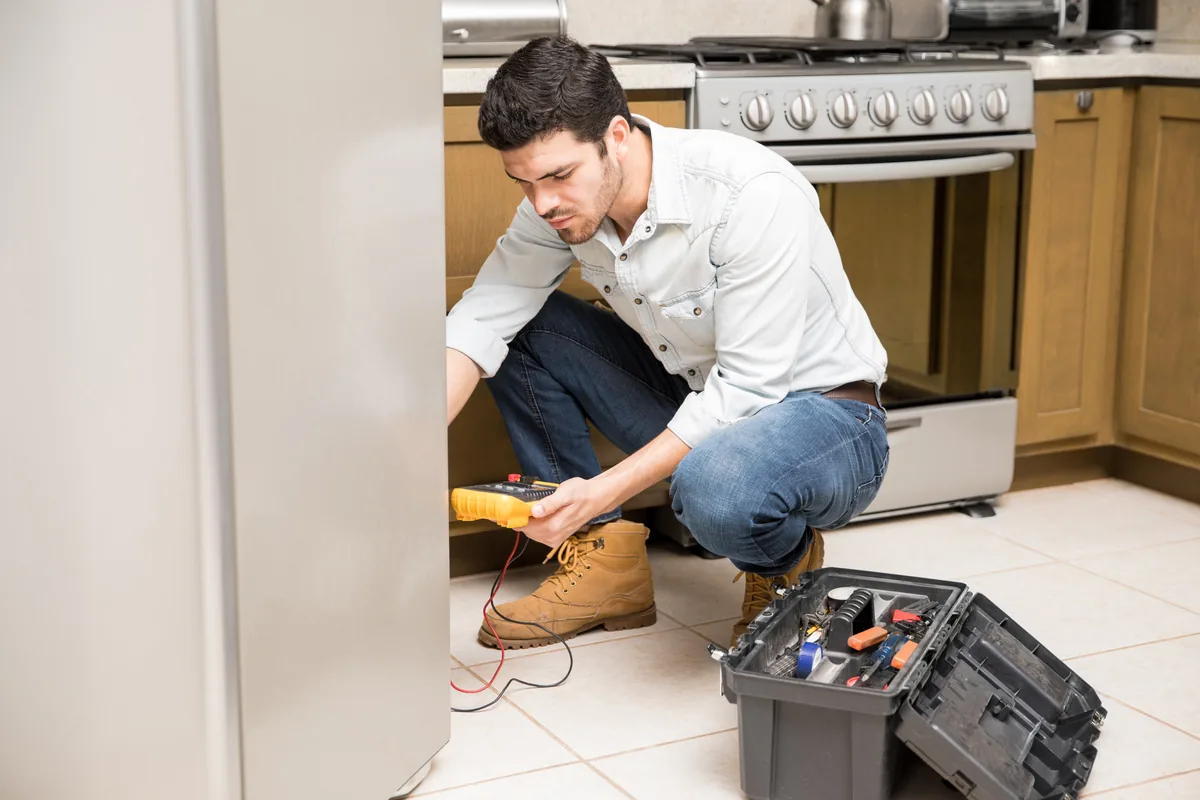
Control and sensor faults that make temperatures drift.
View service
We're here to assist you with any fridge repair needs. Our team responds promptly to inquiries and is available for service.


