
Refrigerator Repair FAQs
Refrigerator not cooling, leaking water, making strange noises or refusing to make ice? These answers cover the problems Fort Myers homeowners ask us about most: what usually causes them, what you can safely check first, when to call, and what to expect from a repair.
Find Your Problem, Then the Fix
Pick the topic that matches your symptom. Each answer gives the usual causes, a safe first check and the point where it is time to call. Where there is a page with more detail, we link to it. Prices are typical for the Fort Myers area, and your quote comes after we diagnose your fridge.
Refrigerator Cooling FAQs
Cooling problems are the number one reason people call a fridge repair company. Start here if the food is warm, the fridge runs all day, or the temperature will not hold.
Why is my refrigerator not cooling?
Check the easy things first: power, the dial, blocked vents and dusty coils. If it is running but the food is warm, the usual causes are a failed evaporator or condenser fan, frost choking the airflow, a bad thermostat or sensor, a start relay that will not kick the compressor on, or a worn door seal. A sealed-system problem is the least likely and the most expensive, so we test it last. If it has been warm for a few hours, call us the same day. Our diagnostic page shows how we work through it.
Why is my freezer cold but my refrigerator is warm?
The freezer makes the cold, and a fan blows some of it through a vent into the fridge. If the freezer is fine and the fridge is warm, that air is not getting through. A dead evaporator fan, a vent blocked by food or ice, a stuck air damper and a failed defrost heater are the usual causes. Look at the freezer back wall. Thick frost means a defrost fault, and defrosting it yourself only buys a few weeks. See evaporator coil and defrost repair.
Why is my refrigerator running but not getting cold?
A fridge can run all day and never reach temperature if the coils are packed with dust, the condenser fan has died, the door seal is leaking, frost has blocked the evaporator, or the thermostat is sending the wrong signal. Less often it is a weak compressor or a refrigerant leak. Clean the coils, try the dollar-bill test on the door, and check for frost. If it is still warm after that, it needs testing, not guessing.
Why is my refrigerator not cooling even though the compressor is running?
A compressor that hums does not prove the system is working. It can run while the fridge stays warm if a fan has failed, frost is blocking the air, the refrigerant has leaked, or the compressor has lost its pumping ability. A hot compressor with no cooling is a warning sign. This is exactly where we test the cheap parts first, then the sealed system, because the repair bill is very different. See compressor repair.
Why is my refrigerator not cooling even though the fans are running?
Fans only move air. If the air they move is not cold, the fault is upstream: heavy frost on the evaporator coil, a failed defrost system, a weak compressor, a start-component problem or a refrigerant leak. Moving air over an iced-up coil gives you almost no cooling. Look inside the freezer for frost, and note whether the freezer is cold. That one detail tells us a lot.
Why does my refrigerator run constantly?
A fridge that never cycles off is struggling to reach its temperature. Energy.gov also advises leaving a few inches of air space behind the fridge. See the full answer and checklist.
Why does my refrigerator stop cooling and then start working again?
Intermittent cooling usually means something is overheating or sticking. A compressor overload that trips and resets, a fan that stalls, a defrost timer that is stuck, or a loose connection can all do it. Because the fridge may be fine when we arrive, write down when it happens: the time of day, whether the door was opened, and what the freezer was doing. That log can save a lot of diagnostic time.
Why does my refrigerator sometimes get too cold and freeze food?
Usually the setting is too cold, or something is telling the fridge to keep cooling: a stuck air damper, a drifting temperature sensor or a faulty control. Food placed against the back wall or a cold-air vent freezes first. Raise the setting one notch, wait 24 hours, and move delicate food away from the vents. If it keeps freezing, see thermostat repair.
Why does my refrigerator temperature keep changing?
Door openings, overloaded shelves and blocked vents cause swings, and so do a drifting thermostat, a failing sensor and a weak defrost cycle. In Fort Myers, a fridge in a hot kitchen or garage also swings more. See the full answer and checklist.
Why does my refrigerator show the right temperature but feel warm inside?
The display reads one sensor in one spot, and that spot can be cold while the rest is not. The FDA says the fridge should be at 40 degrees or below, and the freezer at 0. See the full answer and checklist.
Refrigerator Leak FAQs
Where the water appears tells you most of the story. Use these answers to work out whether it is the defrost drain or the water supply, and what to do before it damages the floor.
Why is my refrigerator leaking water?
Water inside, under the crisper drawers, or ice on the freezer floor is almost always a clogged or frozen defrost drain. Water under tile does real damage, so do not wait. See the full answer and checklist.
Why is water leaking from the bottom of my refrigerator?
Water under the fridge can come from the defrost drain and pan, the supply line, the filter housing, the ice maker or the inlet valve, and it travels. The puddle is rarely where the leak starts. Pull the toe grille, check the pan, and look behind the fridge for a wet line or fitting. If the leak stops when you close the supply valve, it is a supply fault. If it does not, look at the defrost side.
Why is there water inside the bottom of my refrigerator?
A blocked or frozen defrost drain is the usual cause. Condensation from a worn door seal or a spill can also do it. See the full answer and checklist.
Why is my refrigerator leaking underneath the freezer drawer?
On bottom-freezer fridges, water or ice under the freezer drawer often comes from a frozen defrost drain behind the back panel, so meltwater refreezes under the drawer. Some French door models are known for this. Do not chip the ice. Let it melt on its own, and expect it to return if the drain or the defrost heater is the cause. A repeat problem is a repair, not a cleaning job.
Could a clogged defrost drain cause my refrigerator to leak?
Yes, it is the number one cause of water inside a fridge. The defrost cycle melts frost off the coil and the water is meant to run down the drain to the pan. See the full answer and checklist.
Why is my refrigerator leaking from the back?
Behind the fridge you have the supply line, the inlet valve, the filter connection and often the drain pan. Slide the fridge out carefully, dry everything and watch for the first drip. See the full answer and checklist.
Why does my refrigerator water line keep freezing?
A frozen fill tube blocks water to the ice maker and dispenser. On many fridges it freezes when the ice bin stays full and the ice maker does not cycle, when a worn seal lets humid air in, or when a heater or temperature control has failed. Thawing it works for a while, but the cause has to be found. If it freezes repeatedly, the airflow or defrost needs checking. See ice maker repair.
Ice Maker FAQs
Ice maker faults are common, and most are not the ice maker itself. These answers cover the freezer, the water supply and the parts that actually fail.
Why is my refrigerator not making ice?
Go through the basics: the ice maker is switched on, the control arm is down, the freezer is near 0 degrees (above about 10 it struggles) and the water supply is open. Then look for a frozen fill tube, a filter that is older than about 6 months or air-locked after a change, and a failed inlet valve. After an outage or a reset, give it up to 24 hours. Still no ice after a day? See ice maker repair or call us.
Why did my ice maker suddenly stop making ice?
A sudden stop usually has a sudden cause: the arm got bumped up, the filter was changed, a power cut reset it, the fill tube froze, or the inlet valve died. Check those first. A reset or an outage can need up to 24 hours before the first ice returns. If the dispenser still gives water but there is no ice, the ice maker module or the fill tube is the likely culprit.
Why does my ice maker make ice only sometimes?
Intermittent ice points to a marginal part. A fill tube that freezes and thaws, a valve that sticks, a freezer that wanders above 10 degrees, or a weak water supply can all give you batches and then nothing. See the full answer and checklist.
Why is my ice maker making hollow ice cubes?
Hollow, thin or shattered cubes mean the mold is not filling. Low water pressure (below about 20 psi), a clogged filter, a valve choked with minerals, a kinked line, or a fridge that is out of level are the usual causes. Homes on private wells see this often. Replace the filter first, then check the line. If it persists, the inlet valve needs attention.
Why does my ice maker freeze into one large block of ice?
Cubes fuse when they sit unused and melt and refreeze. Warm spells in the freezer, a leaking door seal, a leaking fill valve dripping into the bin, or very low use all cause it. Empty the bin, then watch whether it happens again. If it does, check the seal and look for a valve that drips after a fill. A repeat block is a sign something is wrong.
Why is my ice maker leaking water?
A cracked fill tube, a loose connection, a failing inlet valve that will not shut off, a misaligned mold or a frozen drain can all leak. Low water pressure can even make a valve leak because it will not close fully. Shut off the supply and note where the water shows up. The leak is nearly always upstream of the ice maker, so do not replace it before you find the source.
Why does my ice maker make ice but not dispense it?
The ice maker and the dispenser are separate. If the bin has ice but none comes out, look at the chute for a clump, then the auger motor, the dispenser flap or solenoid, the door switch and the control. Cubes fused into a block are a very common cause. Empty the bin and clear the chute. If the dispenser still will not work, the mechanism has failed.
How do I know if my refrigerator ice maker is bad?
Signs include no ice with the water supply and freezer both fine, ice that never finishes a cycle, an ice maker that overfills, or a cycle that makes noise but no ice. Rule out the filter, the supply and the freezer temperature first. See the full answer and checklist.
Can a refrigerator ice maker be replaced?
On most refrigerators the ice maker is a module you can replace, though many are sold as a complete assembly rather than part by part. See the full answer and checklist.
Water Dispenser FAQs
A weak or dead dispenser is nearly always the filter, the line or the valve. These answers help you tell which, and when it is time to call.
Why won't my refrigerator dispense water?
Check the filter, the supply valve and the line behind the fridge, in that order. See the full answer and checklist.
Why did my refrigerator water dispenser suddenly stop working?
Sudden failures tend to follow an event. A new filter that is not seated or is air-locked, a power cut or surge, a fridge pushed back against the water line, or a closed shut-off valve are the usual ones. Check the filter and the valve, and run a few gallons through. If that does not bring it back, the inlet valve or the dispenser control is the likely failed part.
Why is my refrigerator water dispenser very slow?
A clogged filter is the number one cause of slow water, and many makers suggest changing it about every 6 months. After that, look for a kinked line, a half-open valve, low house pressure and a valve choked with minerals. If a new filter does not fix it, the line or valve needs checking. Homes on wells should expect more sediment.
Why does my refrigerator water dispenser leak?
A leaking dispenser can come from the dispenser tubing, the valve, the filter housing or a loose connection. The visible drip is rarely the source, because water runs along tubing before it falls. Dry everything and watch. If water is dripping from the nozzle after you stop, the valve is not shutting fully, and low pressure is sometimes the reason.
Why won't my refrigerator dispense water after replacing the filter?
The filter is not fully seated or twisted into place, it is not the right model, or air is trapped in the line. A cracked housing will leak and a blocked one will not flow. See the full answer and checklist.
Why does my refrigerator water dispenser work without the filter but not with it?
A filter that is clogged, wrongly installed or not an exact match can restrict the flow. If it still will not flow with the right filter, the filter housing may be damaged or blocked. See the full answer and checklist.
Refrigerator Noise FAQs
Some noise is normal. This section helps you tell the sounds that matter from the ones that do not, and what each one usually means.
Why is my refrigerator making a clicking noise?
One click when the compressor starts or stops is normal, and so is the occasional tick of plastic. See the full answer and checklist.
Why is my refrigerator making a buzzing or humming noise?
A low hum from the compressor and fans is part of normal life. A new, loud or constant buzz is not. See the full answer and checklist.
Why is my refrigerator making a grinding noise?
Grinding is usually a fan blade hitting ice, or a fan motor with worn bearings. A seized fan motor leaves the fridge warm, and a hot condenser fan can damage the compressor. See the full answer and checklist.
Why is my refrigerator making a loud noise?
Work out which part is loud. The bottom rear is the compressor and condenser fan, the freezer back wall is the evaporator fan, and a rattle at the front can be a loose drain pan or a fridge that is out of level. The timing helps too, since a noise that comes and goes with the compressor points one way and one that is constant points another. A loud noise with poor cooling needs diagnosis.
Why does my refrigerator make a noise that stops when I open the door?
The evaporator fan in the freezer stops when the door opens, because a switch cuts it. If the noise stops with the door open and starts again when it closes, the fan is the source. See the full answer and checklist.
Compressor and Refrigeration System FAQs
The compressor and sealed system are the most expensive parts of a fridge, which is why it pays to test the cheaper parts first. These answers explain the signs and the decision.
How do I know if my refrigerator compressor is failing?
The classic signs are a warm fridge while the lights and fans work, a compressor that is very hot or runs without stopping, loud knocking or humming, and clicking that never ends in the compressor starting. A bad start relay or capacitor looks exactly the same, and costs a fraction of a compressor. We test those first. A real compressor repair usually runs $500 to $1,000 or more.
Why does my refrigerator compressor overheat?
Poor airflow, dust on the condenser coils, a failed condenser fan, a hot room, an electrical fault or a compressor that is mechanically failing can all make it run hot. A compressor that gets too hot trips its overload and shuts off, which is why a fridge may cool and then stop. Clean the coils and give the fridge air space. If it keeps overheating, the cause needs finding.
Why does my refrigerator compressor start and then stop?
Short cycling is usually the overload tripping, a weak start relay or capacitor, an overheating compressor or a fault in the sealed system. If the compressor starts, runs a few seconds and quits, a failing compressor or low refrigerant is possible. See the full answer and checklist.
Could a bad start relay cause my refrigerator not to cool?
Yes, and it is one of the most common reasons. The relay gives the compressor the push it needs to start. If it fails, the compressor does not start, the fridge stays warm and you hear a click every few minutes. Replacing it is cheap and quick. The catch is that a failing compressor sounds identical, so we test the relay and the compressor before swapping parts.
How do I know if my refrigerator has a refrigerant leak?
Signs are poor cooling that gets steadily worse, a compressor that runs constantly, frost on only part of the evaporator, and sometimes an oily residue at a joint. Refrigerant handling is regulated, so it is not a do-it-yourself job, and venting it is not allowed. A leak is usually a sealed-system repair, and on an older fridge it often costs near the price of a new one.
Can a refrigerator compressor be repaired or does it need to be replaced?
It depends on what failed. The starting parts, the relay, overload and capacitor, can be replaced without touching the compressor. If the compressor itself has failed mechanically or electrically, it is replaced, which is a sealed-system job with a high price. We prove which one you have before we quote.
Is replacing a refrigerator compressor worth the cost?
Usually only if the fridge is under about 8 years old, or is a high-end or built-in model that costs a lot to replace. If the repair costs more than half of a comparable new fridge and the fridge is older, replacing it is the better value. We give you the repair price and an honest view of the fridge, and a second opinion on a high quote is reasonable.
Frost and Freezer FAQs
Frost is a symptom, and where it forms tells us where to look. These answers cover frost, defrosting and freezers that will not stay frozen.
Why is my refrigerator building up frost?
A thin, even film is normal. Thick frost means moisture is getting in or the defrost system is not working. A worn door seal, a door that does not close, frequent opening in humid air, blocked airflow or a failed defrost heater, sensor or timer are the usual causes. Heavy frost on the freezer back wall eventually blocks the air and warms the fridge. See evaporator coil and defrost repair.
Why does my refrigerator keep freezing up?
If the fridge freezes up again after you defrost it, a defrost part has failed, airflow is restricted, the temperature control is wrong or a door seal is leaking. The frost returns because the cause is still there. See the full answer and checklist.
Why does my refrigerator work again after I defrost it?
Frost on the evaporator coil blocks the air, so cooling stops. Defrosting melts it and the fridge works again until the frost builds up. That is not a fix. The defrost system, a leaking seal or a blocked drain has failed, and the frost will come back. A fridge that works for a few weeks after a manual defrost has told you exactly what is wrong.
Why is my freezer not freezing properly?
A freezer that will not freeze can have a leaking lid or door seal, dirty coils, a failed fan, a defrost fault, a start relay or compressor problem. Put a thermometer in the freezer. Food is safe at 0 degrees or below, and above about 10 it starts to soften. Check the seal and the coils, and if the temperature is rising, move food and call us. See freezer repair.
Why is my freezer temperature getting warmer?
A warming freezer is a symptom of a failing fan, heavy frost, a leaking seal, dirty coils or a weakening cooling system. Perishables that were above 40 degrees for more than 2 hours should go. See the full answer and checklist.
Why does my refrigerator freeze food?
Food freezes when the fridge is too cold at the point where the food sits. That is often a setting that is too low, a stuck air damper, a temperature sensor that reads wrong or a control fault. Food placed against the back wall or in front of a cold-air vent freezes first. Raise the setting, wait 24 hours and move delicate items. If it keeps freezing, call us.
Repair Cost, Service and Replacement FAQs
Cost, whether to repair, how long it takes and what to check before you call. These answers give real numbers and real rules so you can decide with confidence.
How much does refrigerator repair cost?
Most refrigerator repairs in Fort Myers land between $100 and $450. A door seal, thermostat, fan motor, relay or water-line fix is usually in the lower half. A compressor, sealed-system repair or main control board can run $500 to $1,000 or more. The part, the model and the age of the fridge decide it, which is why we diagnose first and quote before any work begins.
Is it worth repairing my refrigerator?
If the fridge is under about 8 years old and the failure is a single part like a fan, seal, thermostat or relay, repair it. If the repair costs more than half of a comparable new fridge, replace it. A compressor on an old fridge is the classic borderline case, and built-ins are worth repairing more often because they cost so much to replace. We give you both numbers.
Should I repair or replace my refrigerator?
Weigh four things: the age (most last roughly 10 to 15 years), the cost of this repair against a new fridge, how many repairs it has had, and its energy use. Energy Star says an old fridge uses roughly 35% more energy than a new certified one. If it is old, has had repeat repairs and needs a big one, replacing makes sense. A single cheap fix on a good fridge does not.
How old is too old to repair a refrigerator?
There is no single age. Most fridges last roughly 10 to 15 years, and some good ones go well past that. The repair matters more than the age. A relay or fan on a 12-year-old fridge is often worth doing. A compressor on a 15-year-old one is rarely worth it. Past about 10 years, some technicians use a stricter line, nearer 30% of a new fridge.
How long does refrigerator repair usually take?
Many common repairs, such as a fan, relay, thermostat, door seal or inlet valve, can be finished in one visit if we have the part. Brand-specific or older parts may need ordering, and sealed-system work takes longer. After the diagnosis, we tell you what the repair involves and whether it can be done that visit, before you agree to anything.
Can refrigerator repair be done the same day?
Yes, same-day repair is what we aim for on a fridge that has stopped cooling. Call early in the day, tell us the symptom and the make and model, and we book the earliest visit we can. If a part has to be ordered, we say so before you commit. While you wait, keep the doors shut. See emergency refrigerator repair.
Do refrigerator repair technicians charge a diagnostic fee?
Many do. Published guides put a typical diagnostic or service-call fee at roughly $70 to $130, and many companies credit it toward the repair if you go ahead, but policies differ. Ask any company before you book, and ask whether parts and labor are in the quote. We explain how our visit fee works when you book, and you hear the repair price before any work begins.
What should I check before calling a refrigerator repair technician?
Check that it has power, the dial is where it should be, the doors close properly and the vents are not blocked. Put a thermometer in the fridge and freezer, and note any noise, frost or water. Write down the make and model from the label inside. Keep the doors shut so the food stays cold. That is all we need to plan the visit.
Is it worth repairing an older refrigerator?
Often yes, if the fault is a single part and the fridge was reliable until now. A relay, fan, thermostat or gasket on a well-kept 12-year-old fridge is usually worth fixing. A compressor or a leaking sealed system on an old fridge is rarely worth it. Past about 10 years old, some technicians use a stricter line, nearer 30% of a new fridge.
Is it worth repairing a five-year-old refrigerator?
Almost always, because at five years old a fridge has most of its life ahead of it. Check the warranty or any extended coverage first, especially for a compressor. Even a bigger repair, such as an ice maker assembly or a board, is usually worth doing on a five-year-old fridge, since a new one costs far more.
Is it worth repairing a seven-year-old refrigerator?
Usually yes. A seven-year-old fridge with a single failed part, such as a fan, valve, thermostat or relay, is worth repairing. A big sealed-system repair is closer, so compare the quote with half the price of a new fridge. Many technicians use the 50% rule at this age.
Is it worth repairing a ten-year-old refrigerator?
It depends on the repair. A fan, relay, seal or thermostat on a ten-year-old fridge is usually worth it. A compressor or major sealed-system repair often is not, and past about ten years some technicians use a stricter line, nearer 30%. We give you the repair price and the replacement cost.
How much should I spend repairing an older refrigerator?
A useful rule is to stay under half the price of a comparable new fridge, and under about 30% if the fridge is past 10 to 12 years old. Add the cost of its energy use, since an older fridge runs less efficiently. A small repair on a good fridge is fine. A big one on a failing fridge is not.
How much does refrigerator compressor replacement cost?
Published guides put a compressor replacement at roughly $500 to $1,000 or more, with labor the biggest part, and up to about $1,250 to $1,500 on some models. A relay or capacitor repair costs far less, so we test those first. A compressor on an older fridge is often near the price of a new one, and we tell you honestly.
How quickly should I call a technician if my refrigerator stops cooling?
The same day. A closed refrigerator keeps food safe for about 4 hours, and a full freezer about 48. Food above 40°F for more than 2 hours should go. Keep the doors shut, put a thermometer in, and call early, because a fast fix saves the food. Waiting also lets frost, heat or a hot compressor do more damage.
Refrigerator Brand FAQs
We repair the major refrigerator brands. These answers cover what we commonly see by brand, and what to have ready when you call.
What refrigerator brands do you repair?
We repair the major brands, including Samsung, LG, Whirlpool, GE, Frigidaire, KitchenAid, Maytag and Kenmore, in top-freezer, bottom-freezer, side-by-side, French door and built-in styles. Not sure we do yours? See our pages for Samsung, LG, Whirlpool, GE, Frigidaire and KitchenAid and Maytag, or send us the brand and the model number, which is on a label inside the fridge, usually on the side wall near the top or above the crisper drawers.
Do you repair Samsung refrigerators?
Yes. On Samsung French door models we are often called for ice maker freezing, ice or water under the freezer, defrost drain problems and cooling faults. Some of these are widely reported on certain models. Give us the model number, because parts depend on it, and we diagnose before replacing anything. See our Samsung refrigerator repair page for error codes and fixes.
Do you repair LG refrigerators?
Yes. LG refrigerators can have ice maker, cooling, fan and compressor faults. Some LG models have been widely reported for early compressor failure, so check your warranty and any manufacturer extended coverage before you pay for a compressor. The model number helps us find the right parts. See our LG refrigerator repair page for Er codes and warranty notes.
Do you repair Whirlpool, GE and Frigidaire refrigerators?
Yes. These are among the most common brands we see. The usual faults are evaporator fans, defrost heaters and sensors, inlet valves, door seals, thermostats and start relays, which are usually repairable at the visit. Give us the make and model number when you call, and we check parts before we arrive. See our Whirlpool, GE and Frigidaire pages.
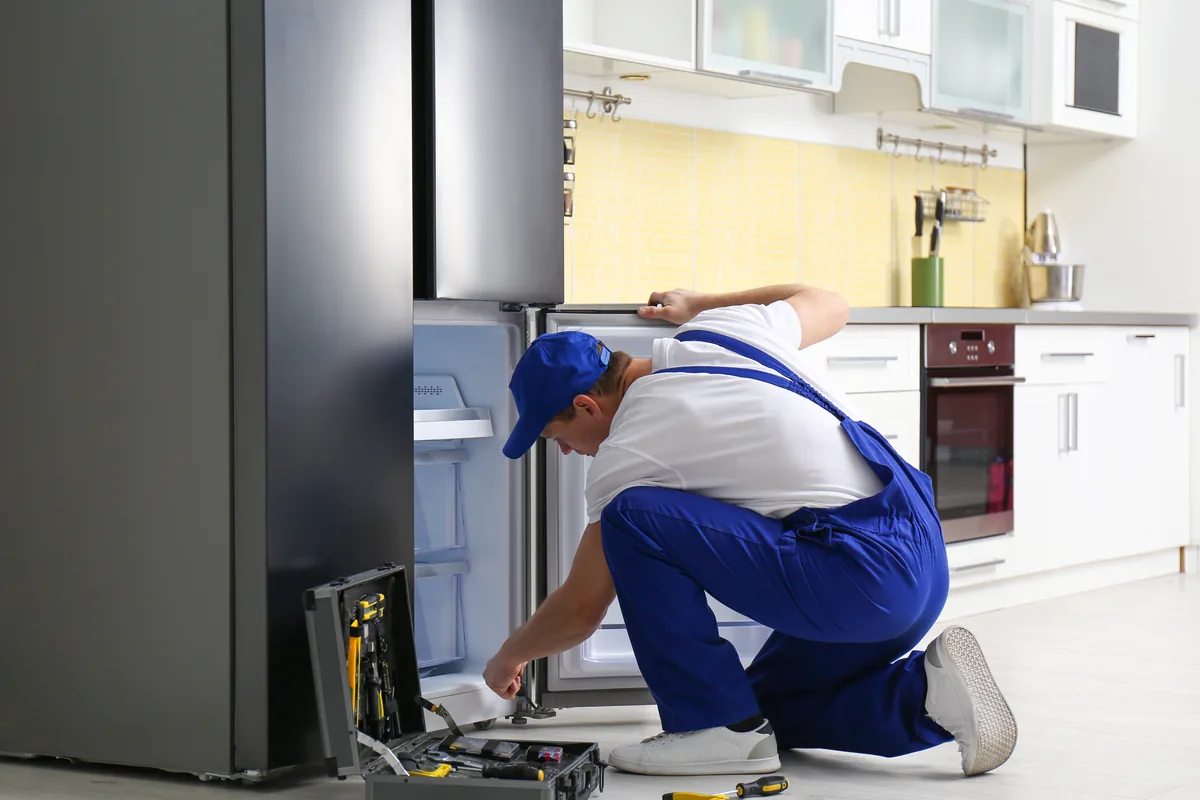
Contact Our Fridge Repair Team
We're here to assist you with any fridge repair needs. Our team responds promptly to inquiries and is available for service.