Defrost drain and pan
The most common cause of water inside the fridge or ice on the freezer floor. We clear the drain, check the pan and find out why it froze.
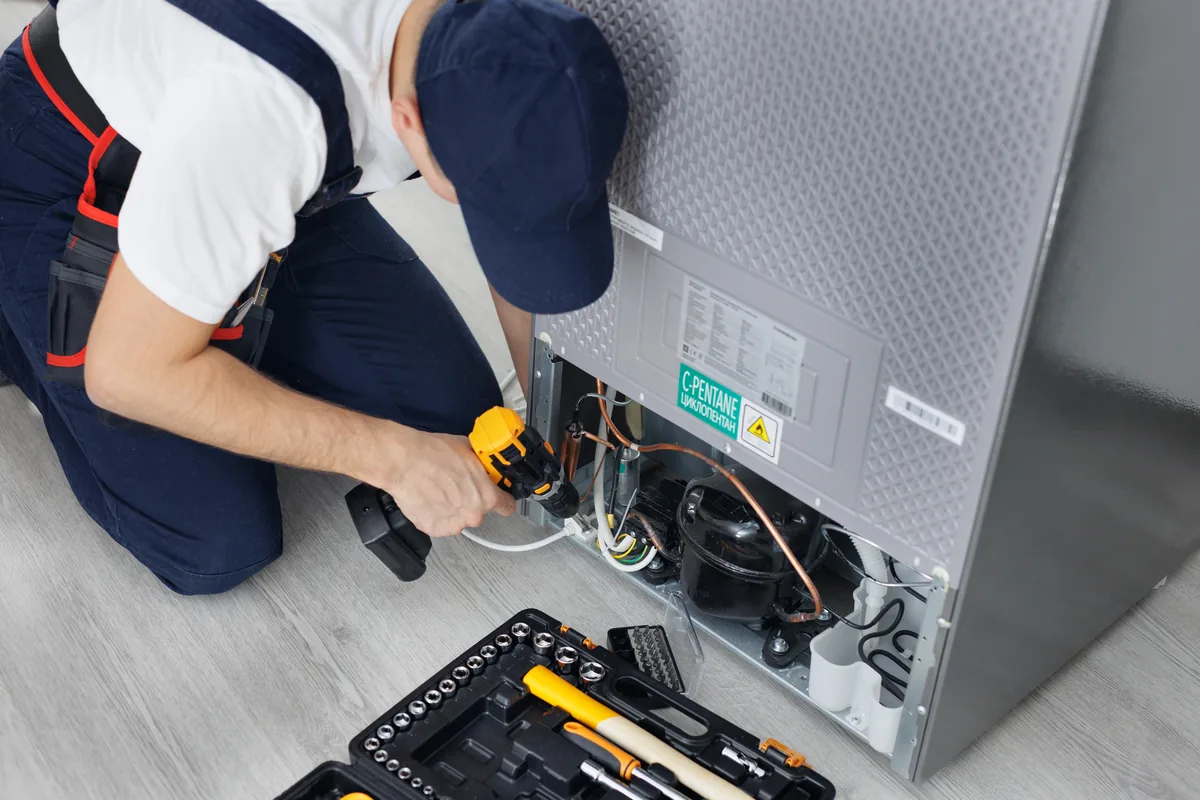
Water on the floor, pooling inside the fridge, or ice under the freezer? A refrigerator leak has a short list of causes, and where the water shows up tells us which one. We find the source, fix it, and quote the price before any work begins. If water is running, shut off the supply valve and call.
There are two kinds of fridge leak: water that comes from inside, and water that comes from the supply. We work out which first.
The most common cause of water inside the fridge or ice on the freezer floor. We clear the drain, check the pan and find out why it froze.
Cracked or kinked lines, loose fittings and failing shut-off valves behind or beside the fridge. We replace them with proper fittings.
A valve that will not shut off, a cracked filter housing, a cracked fill tube or an overfilling ice maker all leak.
Water reservoirs, dispenser tubing and the connections to them, especially on French door and side-by-side models.
A leak is either inside water or supply water. Inside water comes from the defrost cycle: frost on the coil melts, runs down a drain to a pan and evaporates. If that drain clogs or freezes, the water backs up, pools in the fridge or freezer, or drips onto the floor. Supply water comes from the water line that feeds the ice maker and dispenser. If a line, a fitting or a valve fails, it leaks as long as the supply is on.
The difference matters. A defrost drain problem is cheap to fix when caught early, and it comes back until we find out why it froze. A supply leak does more damage, because it runs whenever the water is on and often hides behind the fridge, soaking subfloor and cabinets before anyone sees it. Slab homes with tile or plank floors are especially exposed.
A leak behind a fridge can run for days before it is noticed. Our fridge leak guide and water line repair page cover the supply side.
Match where the water appears to the usual cause, and to what is safe to try before you call.
| What you see | Usual cause | Safe first check | Typical fix |
|---|---|---|---|
| Water inside, under the crisper drawers | Clogged or frozen defrost drain | Look for ice on the freezer floor | Clear the drain; fix why it froze |
| Sheet of ice under or in the freezer | Frozen drain; meltwater refreezes | Do not chip; let it melt | Clear the drain; check the defrost heater |
| Water on the floor in front or under | Drain pan overflow, or a leaking line or valve | Shut off the water supply; see if it stops | Drain, pan, line or valve repair |
| Water behind the fridge | Supply line, fitting, inlet valve or filter housing | Dry it and watch for the first drip | Replace the failed part |
| Water near the dispenser | Dispenser tubing, valve, tank or connection | Check around the dispenser and filter | Replace the tubing, valve or tank |
| Leaks only when the ice maker runs | Fill tube, loose fitting or a valve that will not shut off | Turn the ice maker off and see | Replace the tube or valve |
| Water line keeps freezing | Airflow, heater or temperature control problem | Check the freezer temperature and seal | Fix the cause of the freezing |
| Leak continues after a drain tube replacement | Another blockage, a misplaced tube or a failed defrost heater | Check the tube position and the pan | Diagnose the defrost system |
On the call we ask the make and model, where the water appears, and whether it runs all the time or only sometimes. Shut off the supply if it is running.
We check the shut-off valve, line, filter, inlet valve, drain, pan and ice maker, and we dry the area so the first drip shows us the source.
A frozen drain means a defrost problem. A cracked line means age or a kink. We fix the cause so the leak does not return.
You hear the cause, the part and the price first. We also point out damage to floors or cabinets that needs its own repair.
We fix the source, run water through the system and check every connection for drips before we leave.
Floors, humidity and storms make a fridge leak costlier here. These are the local factors we think about on every leak call.
Most Fort Myers kitchens sit on a slab with tile or plank flooring. Water behind the fridge can seep under the floor out of sight.
Warm, humid air makes a damp cabinet or wall cavity grow mold fast. Dry any leak thoroughly and tell us if water got behind panels.
Homes on private wells, common in Lehigh Acres and Buckingham, can clog valve screens and filters, which can leave a valve leaking.
Supply lines can be kinked or loosened by a storm cleanup or a fridge move. If a leak started then, check the line first.
$100 - $450 depending on scope
Most refrigerator leak repairs in Fort Myers fall within $100 to $450. A drain clear or a fitting is toward the lower end, a line or inlet valve is in the middle, and a leak that has already damaged the floor needs a separate repair. You get a clear quote before any work begins.
A defrost drain, a supply line and a valve have different costs. We find the source before we quote.
If a defrost heater or sensor froze the drain, that part is replaced too.
Some kitchens make the back easy to reach and some do not. Access affects labor.
Valves and tubes differ by model. Your model number lets us check parts before we arrive.
We fix the source. Damage to floors or cabinets needs a separate repair. Check your homeowners policy, since wear and tear is often excluded.
When comparing companies, ask whether the diagnostic fee is credited toward the repair, and whether parts and labor are in the quote.
| Job | Typical range | What it depends on |
|---|---|---|
| Water inlet valve replacement | $105 to $205 | Valve type and access |
| Water line or valve repair (general) | $170 to $500 | Material, valve type and access |
| Defrost drain clear and defrost part | Quoted after diagnosis | Whether a heater or sensor failed |
General US market estimates from published cost guides (Fixr, EasyBear), not a Fridge Masters quote. Our quote comes after we diagnose your fridge.
Look at where it shows up. Water inside the fridge, under the crisper drawers, or ice on the freezer floor is almost always a clogged or frozen defrost drain. Water on the floor behind or under the fridge points to the supply line, a loose fitting, the inlet valve, a cracked drain pan or the filter housing. Shut off the supply valve. If the leak stops, it is on the water side.
Either the defrost water is overflowing, or something on the supply is failing. A blocked drain makes the pan overflow, a cracked line or a loose fitting leaks whenever the water is on, and a failing inlet valve can drip. Shut off the supply valve and watch. If the leak continues, the pan and drain are the suspects. If it stops, look at the line and the valve.
A blocked or frozen defrost drain is the usual cause. Meltwater cannot leave, so it runs into the fridge and pools under the drawers. A worn door seal, a spill or a very humid day can leave water too. Check the seal and look for ice on the freezer floor. If it keeps returning, the drain needs clearing, and we need to find why it froze.
On bottom-freezer and some French door models, the defrost drain is behind the back panel, and when it freezes, meltwater runs forward and collects or refreezes under the freezer. Do not chip the ice. Let it melt, and expect it to return if the drain or the defrost heater is the cause. A repeat problem is a repair, not a clean-up job.
A frozen defrost drain behind the back panel is the most common cause. Water refreezes under the drawer, and some French door models are known for it. It can also be a leaking ice maker fill tube or a loose water fitting if the ice maker is in the freezer. We find which by looking at where the ice starts.
Behind the fridge you have the supply line, the inlet valve, the filter connection and often the drain pan. A weeping fitting, a cracked line, a failing valve or an overflowing pan all show up there. Slide the fridge out carefully, dry everything and watch for the first drip with the water on. Thin plastic tubing that has been kinked behind the fridge is a common culprit.
Dispenser leaks come from the tubing behind the dispenser, the valve, the filter housing, a loose connection or, on some models, the water tank. The drip you see is rarely the source, because water runs along tubing before it falls. Dry everything and watch. If it drips from the nozzle after use, the valve is not shutting fully, and low pressure is sometimes the reason.
A frozen fill tube blocks water to the ice maker and dispenser. It freezes when the freezer runs too cold, when a worn seal lets in humid air, when the ice bin stays full and the ice maker does not cycle, or when a heater or control has failed. Thawing works for a while, but the cause has to be found. If it freezes repeatedly, the airflow, the seal or the defrost needs checking.
Yes, it is the number one cause of water inside a fridge. The defrost cycle melts frost off the coil, and the water is meant to run down the drain to the pan. If the drain is blocked by debris or frozen, it has nowhere to go. It collects in the freezer, runs into the fridge or drips on the floor. Clearing it fixes today's leak. Finding why it froze stops the next one.
Three things come up. The tube is the wrong one or not seated in the pan, the drain is blocked further along, or the defrost heater has failed, so frost keeps building and refreezing the drain. A new tube treats the symptom. If the leak returns in days or weeks, the defrost system needs testing, and the drain hole at the freezer floor needs checking for ice.
That points to the ice maker's water path: a cracked fill tube, a loose fitting, an inlet valve that will not shut off, or a misaligned mold that overfills. Low water pressure can also stop a valve closing fully. Turn the ice maker off and shut the supply to confirm. Then we find where the water leaves the system, and replace that part.
Some models have a water tank or reservoir behind the dispenser. They can leak from a cracked tank, a loose tube or a failed fitting, and some brands have a code for it (LG, for example, lists water tank errors). Shut off the supply, find which connection is wet, and call us. A leaking tank is usually replaced, not repaired, so we check the model.
Straight answers to what Fort Myers homeowners ask about refrigerator leaks. Not seeing your question? Call and ask.
Ask the local teamLines, valves and fittings for supply leaks.
View service
Frozen drains and defrost faults behind inside leaks.
View service
Overfilling and leaking ice makers.
View service
Dispenser leaks, drips and slow water.
View serviceWe're here to assist you with any fridge repair needs. Our team responds promptly to inquiries and is available for service.