Location and timing
Bottom rear is the compressor and condenser fan. The freezer back wall is the evaporator fan. A noise that stops when the door opens is the evaporator fan.
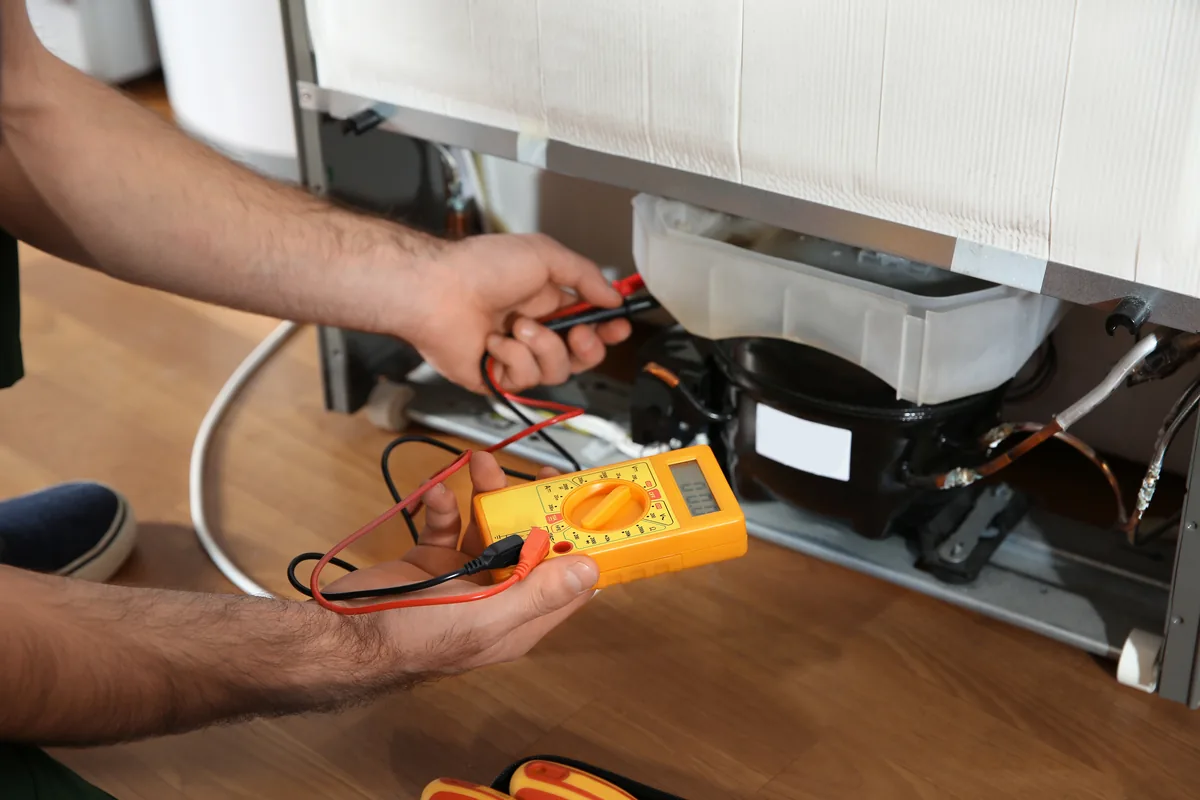
Clicking every few minutes, a loud buzz, a grinding fan or a knock from the back? Some fridge noise is normal, and some is a part asking for help. We tell you which sound means what, find the failing part, and quote the price before any work begins. If it smells burnt, switch the fridge off and call.
A noise has a location, a pattern and a character. Those three clues usually point to the part before we open anything.
Bottom rear is the compressor and condenser fan. The freezer back wall is the evaporator fan. A noise that stops when the door opens is the evaporator fan.
Grinding, whining and howling are often fan bearings or a blade touching ice. We clear the ice and fix the defrost fault behind it.
Clicking, buzzing and short cycling point to the start components or the compressor. We test the cheap parts first.
A rattling drain pan, a fridge out of level or a line touching the wall is the harmless cause. We check these first, too.
A refrigerator is never silent. A low hum from the compressor and fans, a click when it starts or stops, the gurgle of refrigerant, the tick of plastic contracting and the plop of ice dropping or water filling are all normal. What matters is a change: a new sound, a louder one, one that comes with poor cooling, or one that is constant.
Noise is a useful early warning. A fan with worn bearings starts with a faint hum or whine, then buzzes, then grinds before it seizes. A start relay that is failing clicks every few minutes with no cooling. A compressor mount that has loosened knocks. Catching these early is far cheaper than a warm fridge full of spoiled food.
A closed fridge keeps food cold for about 4 hours, so do not wait on a loud, constant noise. Our noisy compressor guide covers more.
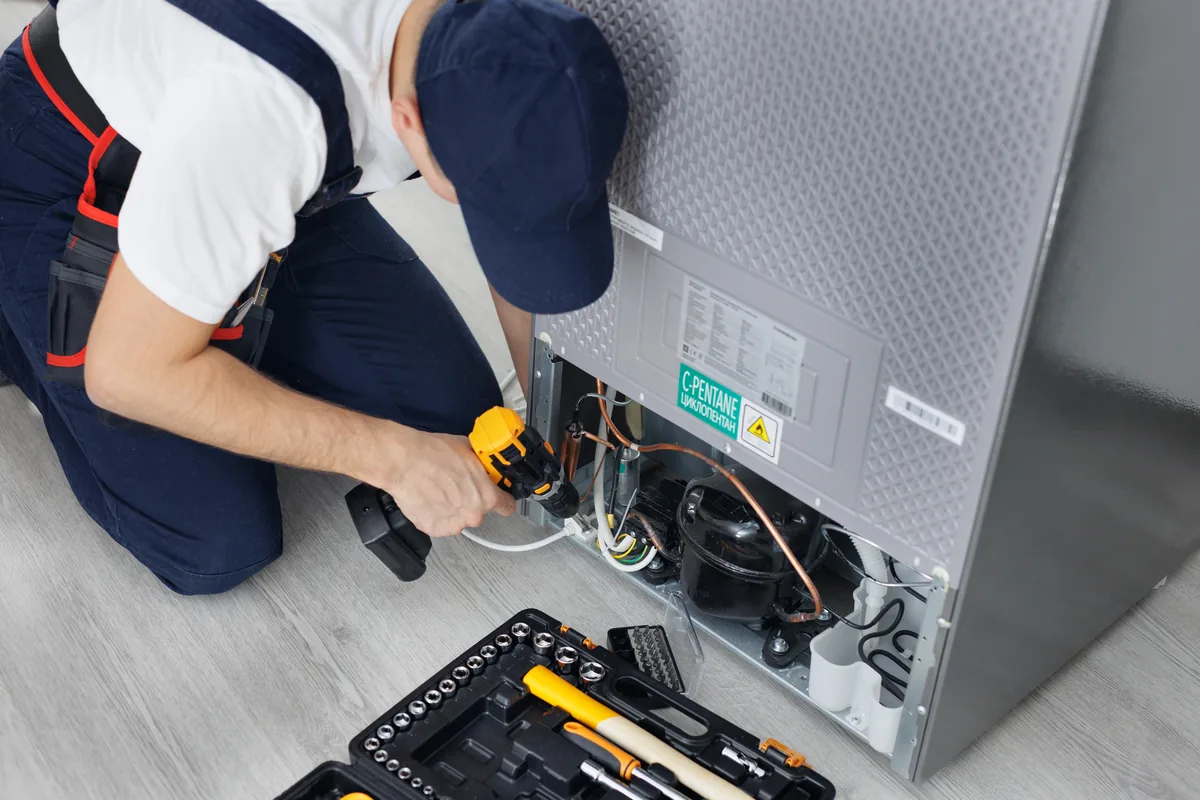
Match the sound and its location to the usual cause, and to what is safe to try before you call.
| What you see | Usual cause | Safe first check | Typical fix |
|---|---|---|---|
| Click every few minutes, then silence, warm fridge | Start relay or overload failing to start the compressor | Listen at the bottom rear | Replace the relay or capacitor |
| Loud constant buzz from the bottom rear | Condenser fan, compressor or a loose part | Check the fan area for debris | Fan or compressor repair |
| Humming that is louder than before | Fan motor wearing, or the compressor working harder | Check the coils and the room temperature | Clean the coils; fan repair |
| Grinding or whining from the freezer | Evaporator fan bearings or a blade hitting ice | Look for frost on the back wall | Clear ice; replace the fan |
| Knocking or banging | A loose compressor mount, drain pan or the ice maker harvesting | Check level and loose parts | Secure or replace the mount |
| Howling or whistling | A fan with failing bearings, or air through a blocked vent | Clear the vents | Fan replacement |
| Noise stops when the door opens | Evaporator fan (the door switch stops it) | Check for ice and the fan blade | Fan or defrost repair |
| Motor louder after a hot week | A condenser fan or compressor struggling in heat or dust | Clean the coils | Coil clean; fan replacement |
On the call we ask the make and model, what the sound is like, where it comes from and whether the fridge is still cold.
We listen at the compressor, the condenser fan and the freezer, and we check the level, the pan and the lines.
We test the fan, relay, capacitor or compressor circuit to prove what has failed before we replace anything.
You hear the cause, the part and the price first.
We fit the part, check the noise is gone and confirm the fridge is cooling properly.
Heat, dust and ice all make fans and compressors work harder here. These are the local factors behind many noisy-fridge calls.
Highs near 91°F from June to September make compressors and fans run longer, and a hot garage pushes them harder still.
Dust on the condenser makes the fan and the compressor strain. Cleaning the coils often quiets a fridge.
Humid air feeds ice on the evaporator, and a fan hitting ice makes a loud noise. A worn door seal makes it worse.
After a storm, a damaged relay can click and a damaged fan can hum. If a noise started after an outage, tell us.
$100 - $450 depending on scope
Most noisy-fridge repairs in Fort Myers fall within $100 to $450. A fan motor or relay is toward the lower end, and a compressor repair can cost $500 to $1,000 or more. Tightening a loose part or clearing ice can cost far less. You get a clear quote before any work begins.
A loose pan is cheap. A fan is modest. A compressor is major. This is why we locate the sound first.
The location changes the access and the labor.
If ice hit the fan, we fix the defrost problem too, so the new fan does not fail early.
Parts depend on the model. Give us the model number and we check before the visit.
On a fridge under about 10 years old, repair is usually worth it. On an older one, we compare with replacement.
When comparing companies, ask whether the diagnostic fee is credited toward the repair, and whether parts and labor are in the quote.
| Job | Typical range | What it depends on |
|---|---|---|
| Fan motor replacement | $95 to $280 | Evaporator or condenser; access |
| Start relay or capacitor | $100 to $300 | Part and model |
| Compressor or sealed-system repair | $500 to $1,000+ | Often near the price of a new fridge |
General US market estimates from published cost guides (Fixr, EasyBear), not a Fridge Masters quote. Our quote comes after we diagnose your fridge.
One click when the compressor starts or stops is normal, and so is the occasional tick of plastic. Clicking every few minutes with no cooling is not. That is usually the start relay or overload trying to start the compressor and failing. A relay is a cheap part, so it is worth testing first. If the clicking comes with a warm fridge, call us.
A faint buzz when the ice maker fills or the compressor starts is normal. A loud or constant buzz is not. It can mean a condenser fan with worn bearings, a loose part, a failing compressor or a valve vibrating. Find where it comes from: the bottom rear is the compressor and condenser fan, and the freezer is the evaporator fan. If it smells hot, switch it off.
A low hum from the compressor and fans is part of normal life. A hum that is louder than it used to be, or that never stops, can be a fan motor wearing, dusty coils making the compressor work harder, or a compressor under strain. Clean the coils and give the fridge air space. If the hum is new and loud, or comes with poor cooling, call us.
Grinding is usually a fan blade hitting ice, or a fan motor with worn bearings. It can also be the ice maker auger. If it gets worse when the freezer is frosty, the defrost system may have failed and the fan is touching ice. Do not ignore it. A seized fan leaves the fridge warm, and a hot condenser fan can damage the compressor.
A knock is usually mechanical: a loose compressor mount, a drain pan, a fan blade touching something, or the ice maker harvesting. Check the fridge is level and not touching the wall. A knock from inside the compressor itself, with poor cooling, is more serious. If it persists after you check the simple causes, call us.
Work out which part is loud. The bottom rear is the compressor and condenser fan, the freezer back wall is the evaporator fan, and a rattle at the front can be a loose drain pan or a fridge out of level. Timing helps too, since a noise that comes and goes with the compressor points one way and a constant one points another. A loud noise with poor cooling needs diagnosis.
A howl or whistle usually comes from a fan with failing bearings, or from air moving through a blocked or iced-up vent. Check the vents for ice or food blocking them. If the freezer fan is the source, you will hear it at the back wall. A howling fan is on its way out, and replacing it early avoids a warm fridge.
A fan gets loud when its bearings wear, when its blade hits ice or debris, or when dust loads it. Evaporator fans in the freezer often hit ice from a defrost problem. Condenser fans at the back suffer from dust. Clear the ice or dust, and if it is still loud, the motor needs replacing. A noisy fan usually fails within weeks.
The evaporator fan in the freezer stops when the door opens, because a switch cuts it. If the noise stops with the door open and returns when it closes, the fan is the source. Either its bearings are failing, or it is hitting ice on the coil. If there is frost on the freezer back wall, the defrost system has failed. Check the freezer first.
On fridges with a separate freezer control or a freezer-only fan, the noise is from the freezer side: the evaporator fan, the ice maker or frost. If the noise stops when the freezer is off, the freezer's fan or its defrost-related ice is the likely cause. Do not leave the freezer off for long, because food will thaw. Call us.
A click followed by silence is the start relay or overload trying to start the compressor and failing. A failing capacitor does the same. It is worth testing these first, because they are cheap and common. If a new relay does not fix it, the compressor may have seized, and we will explain the repair-or-replace numbers honestly.
A click and a buzz together usually means the compressor is trying to start, drawing power but not turning. The causes are a failed start relay, a weak start capacitor, low voltage or a compressor with a mechanical fault. Do not keep power cycling it. Unplug it and call, because repeated attempts can overheat the compressor.
Short cycling is usually the overload tripping, a weak start relay or capacitor, an overheating compressor or a fault in the sealed system. Dirty coils and a dead condenser fan make it worse. Listen for a click followed by silence. Clean the coils, and call us if it keeps starting and stopping.
The motor is working harder or wearing out. Dusty coils, a hot room, a worn fan or a compressor under strain all make it louder. Clean the coils, give the fridge air space and check whether it is level. If the noise is new, constant or comes with poor cooling, have it tested before it fails.
Straight answers to what Fort Myers homeowners ask about refrigerator noises. Not seeing your question? Call and ask.
Ask the local teamWe're here to assist you with any fridge repair needs. Our team responds promptly to inquiries and is available for service.