Power at the outlet and the cord
We check the outlet, the breaker, the plug and the cord, and whether the outlet is properly grounded. Many dead fridges start here.
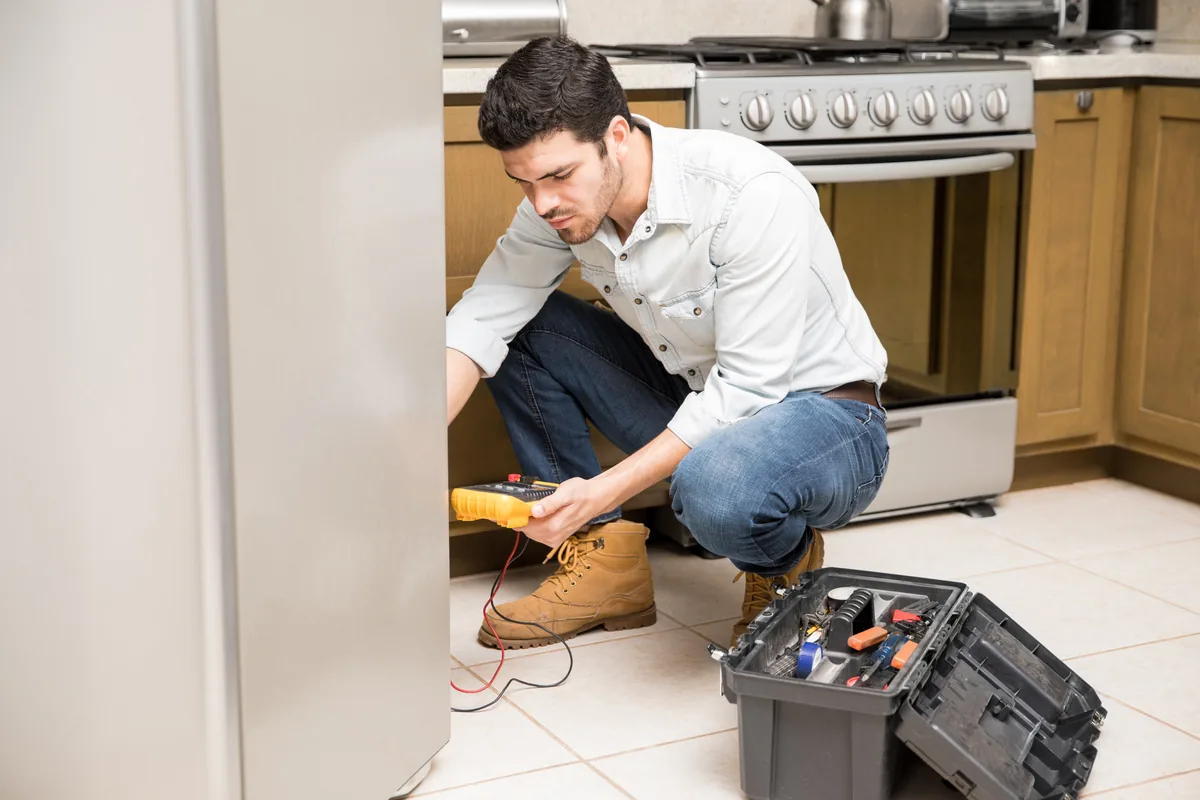
Fridge not working at all, display blank, an error code you cannot read, lights flickering, or a burning smell? Electrical faults can look scary, and many are simple, but some are safety matters. We tell you which, find the failed part, and quote before any work begins. If you smell burning or feel a shock, unplug the fridge and call.
Electrical faults are found by testing, not guessing. We start at the outlet and work to the board, and we treat safety issues first.
We check the outlet, the breaker, the plug and the cord, and whether the outlet is properly grounded. Many dead fridges start here.
We test the control board, the display and its connections, the door switch and the temperature sensors, and read the error code.
Flickering or dead lights usually come from the bulb or LED module, the socket, or the door switch. We test each.
A tingle from the door handle, a burning smell or a tripping breaker is a safety matter. We test the cord, the motor windings and the grounding.
A modern refrigerator is a small computer with a cooling system attached. A main control board runs the compressor, the fans and the defrost cycle. Sensors tell it the temperature. A display shows settings and codes. A door switch tells it when the door is open. When one fails, you can get a dead fridge, a fridge that will not cool, a blank display or a code, and the cause is often a cheap sensor or switch, not the board.
Surges are a big cause here. After a storm, the first parts to go are the start relay, the board and the ice maker electronics. Safety matters too: a fridge that gives you a tingle, smells burnt or trips a breaker should not stay plugged in. We test those first, and we do not recommend running a fridge with an electrical fault.
For codes by brand, see our pages for Samsung, LG, GE, Frigidaire, Whirlpool and KitchenAid and Maytag.

These come from manufacturers’ support pages. They show how to reset safely, and what to do if a fridge gives a shock.
Samsung says to power off for 60 seconds for several codes. LG says unplug for 60 seconds for its cycle error. GE says 1 to 2 minutes for demo mode. Frigidaire says 30 seconds to 5 minutes by situation.
Samsung (OF OF), GE (DE), Frigidaire (77 77) and Whirlpool-family brands (Showroom Mode) have modes that stop cooling. They are not faults.
Frigidaire says to use a dedicated, grounded outlet, and many manuals say not to use an extension cord.
Samsung says to unplug it and switch off its circuit breaker, and not touch the fridge until it has been checked.
A missing ground can leave leakage current on the metal cabinet. Try a properly grounded outlet. If the house wiring is the problem, call an electrician.
GE and Frigidaire show PF after a power interruption, and tell you to check temperatures and reset.
Match what you see to the usual cause, and to what is safe to try before you call.
| What you see | Usual cause | Safe first check | Typical fix |
|---|---|---|---|
| No lights, no display, nothing runs | No power at the outlet, a tripped breaker, a failed cord or a dead board | Test the outlet with a lamp; check the breaker | Outlet, cord or board repair |
| Lights work, but no cooling or airflow | Failed fan, door switch or a board that is not driving them | Listen for the fans; press the door switch | Replace the fan, switch or board |
| Display blank, fridge runs | A loose display cable, a failed display or a board fault | Unplug 5 to 10 minutes and restart | Replace the display or board |
| Display shows an error code | A sensor, fan or board fault, or a non-fault mode | Look up the code; reset once | Fix the part the code points to |
| Interior lights dead or flickering | Bulb, LED module, socket or door switch | Replace the bulb; check the socket | LED module, socket or switch |
| Freezer light burns out again and again | Vibration, wrong bulb, a damp socket or a door switch problem | Use the right bulb; check for moisture | Replace the socket or switch |
| Tingle from the door handle | Leakage current, a missing ground or a motor winding fault | Unplug the fridge; try a grounded outlet | Electrician for the outlet; test the fridge |
| Burning smell | Overheating relay, fan motor, dust on a hot part or a wiring fault | Unplug; look for scorching | Replace the failed part |
On the call we ask the make and model, any code, what the display does and whether there was a storm or a smell. If there is smoke or a shock, unplug first.
We check the outlet, the cord, the grounding and any safety issue before anything else.
We use the code to start, then test the sensor, switch, fan or board to prove which part has failed.
You hear the cause, the part and the price. A main control board can be costly, so we say if a cheaper cause is possible.
We fit the part, reset the fridge and confirm it cools. We explain what to watch.
Storms, humidity and salt all attack the electrical parts of a fridge here. These are the local causes we think about on every electrical call.
Lightning and grid switching damage relays, boards and ice maker electronics. After a storm, unplug the fridge for 5 to 10 minutes and restart it. A surge protector made for appliances helps.
Moist air corrodes connectors, sockets and board contacts. A freezer light that keeps burning out often has a damp socket.
Near the Gulf, salt corrodes terminals and wiring. Coastal fridges often need connectors cleaned or replaced.
A fridge left plugged in all summer can suffer repeated surges. Consider unplugging a spare fridge before a long absence.
$100 - $450 depending on scope
Most electrical repairs in Fort Myers fall within $100 to $450. A bulb, socket, switch, sensor, relay or capacitor is toward the lower end. A main control board can cost $500 to $1,000 or more, so we test the cheaper causes first. You get a clear quote before any work begins.
A bulb or switch is small. A sensor or relay is modest. A main board is major.
Boards are model-specific and can be costly. Your model number lets us check before the visit.
A fridge with a shock or burning fault is unsafe to run. We fix the cause, and may recommend an electrician for house wiring.
After a surge, a protector made for appliances protects the new part. We can advise.
On a fridge under about 10 years old, repair is usually worth it. On an older one, a major board may not be.
When comparing companies, ask whether the diagnostic fee is credited toward the repair, and whether parts and labor are in the quote.
| Job | Typical range | What it depends on |
|---|---|---|
| Thermostat or temperature sensor | $100 to $260 | Mechanical or electronic |
| Start relay, overload or capacitor | $100 to $300 | Part and model |
| Main control board | $500 to $1,000 | Brand and model |
General US market estimates from published cost guides (Fixr, EasyBear), not a Fridge Masters quote. Our quote comes after we diagnose your fridge.
These manufacturer pages explain codes, resets and what to do about a shock. They open in a new tab.
Links go to the manufacturers’ own websites. Fridge Masters is an independent refrigerator repair company and is not affiliated with those brands. For any shock, smoke or burning smell, unplug the fridge, and the manufacturer’s safety instructions for your model always take priority.
Start at the outlet. Plug a lamp into it, check the breaker and any GFCI reset, and look at the cord and plug. If the outlet is live, the fault is in the fridge: a failed cord, a dead control board, a thermal fuse or a failed power supply. If lights come on but nothing runs, the problem is further along, in a relay, board or fan.
A live outlet means the fault is inside. A failed start relay or capacitor, a dead control board, a tripped thermal protector, a failed compressor or a damaged cord can all stop it starting. Listen for a click every few minutes, which points to the start parts. If it is silent and dead, the board or the supply needs testing.
Lights work from a simple circuit. The fans, the compressor and the defrost run from the control board. If the fans are silent, check the door switch, which can cut the evaporator fan, and look for ice jamming the fan. A failed fan motor, a board that is not driving it, or a defrost fault with a frozen coil are the usual causes.
A blank display with a running fridge usually means a loose or failed display cable, a failed display or a board fault. Unplug the fridge for 5 to 10 minutes and restart it. If the display stays blank but the fridge cools, it is a display or board issue, not an emergency, though the settings become hard to see. We test the display and its connections.
A code is the fridge telling you where to look. It can mean a sensor, fan or heater fault, a communication problem, or a mode that is not a fault at all, like demo or showroom mode. Note the code and the make and model, and look up your brand's page. Reset once, and if it returns, the part the code points to needs testing.
It depends on the brand. Samsung, LG, GE, Frigidaire and Whirlpool each use different codes, and some brands show none to the owner. Our brand pages list the common ones from each manufacturer's own support page, with what to try and when to call. If your code is not listed, send us the code and the model number and we will tell you.
The bulb or LED module is the usual cause, so replace it with the right type and wattage first. If a new bulb does not light, check the socket for corrosion, and the door switch, which turns the light on when the door opens. A failed LED board or a control fault is less common. If the lights and the cooling both fail, call us.
A bulb that is loose or failing, a corroded or damp socket, a door switch that is sticking or a failing LED driver will make a light flicker. If the whole fridge flickers or the compressor stutters, the supply or the board may be unstable. Tighten or replace the bulb first. If it keeps flickering, have the socket and switch tested.
Vibration, the wrong bulb or wattage, moisture in the socket, a loose socket and a door switch that keeps the light on can all burn bulbs out. In a humid climate like ours, moisture is a common culprit. Use the exact bulb in your manual, check the socket for corrosion and make sure the light goes off when the door closes.
A tingle from the cabinet or handle is leakage current. It can come from a missing ground at the outlet, a damaged cord, or a motor or heater winding with a fault. Unplug the fridge and switch off its circuit breaker. Samsung says not to touch the fridge until it has been checked. Try a properly grounded outlet. If it persists, call us, and call an electrician for the house wiring.
Dust burning off a hot part is a common, harmless cause the first time a fridge runs. A persistent smell is not. An overheating fan motor, a failing relay or compressor, a damaged wire or a bulb that is too strong can burn. If the smell returns, switch the fridge off, unplug it and call us. Do not run it while it smells burnt.
It can, but it is rarely the first suspect. Many board symptoms come from a cheap sensor, a door switch, a relay or a bad connection, and boards are costly. We test those first. A board fault is likely when codes appear for several unrelated parts, or after a surge. We tell you honestly before you buy one.
Unplug it for 5 to 10 minutes, then plug it back in, and give it a few hours. Some brands specify different times: Samsung 60 seconds for several codes, LG 60 seconds for its cycle error, GE 1 to 2 minutes for demo mode. Check your manual. A reset clears glitches, not failed parts, so if the fault returns, call us.
Straight answers to what Fort Myers homeowners ask about refrigerator electrical faults. Not seeing your question? Call and ask.
Ask the local team
Relays, boards, sensors and switches.
View service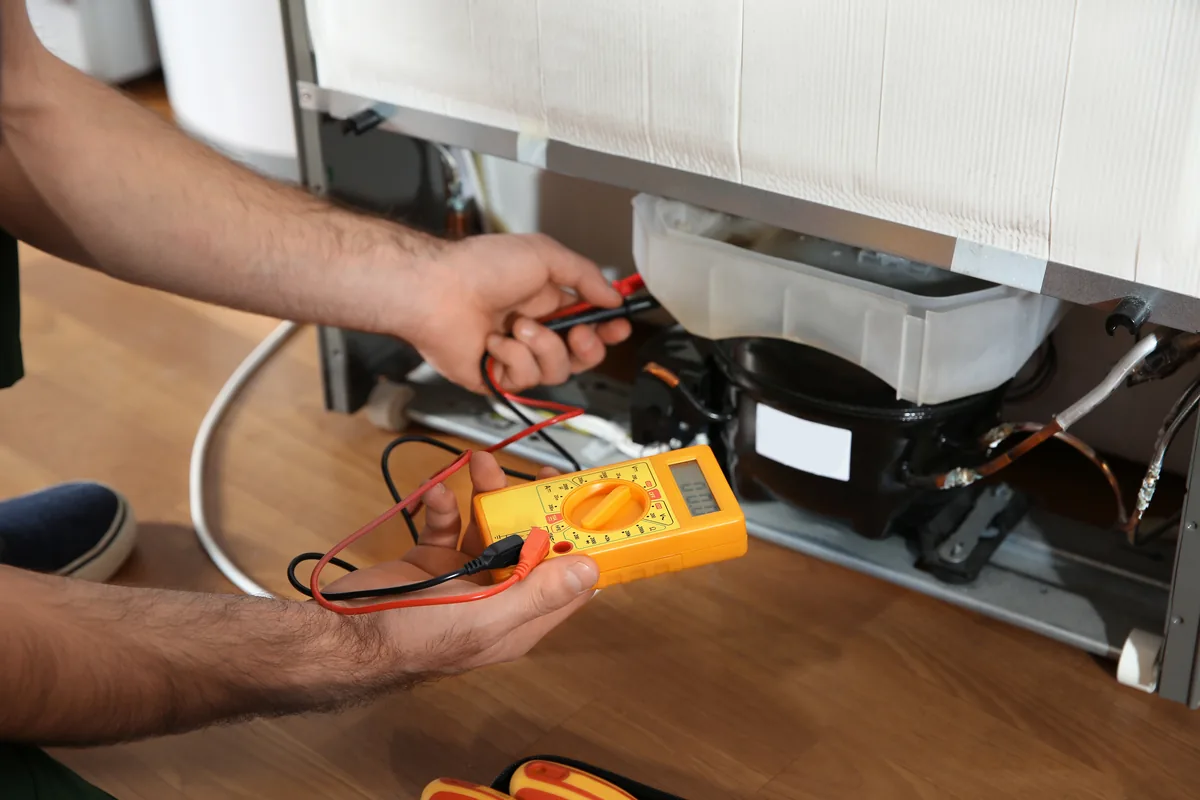
Start parts and compressor faults.
View service
How we find the failed part.
View service
Same-day help after a storm or surge.
View serviceWe're here to assist you with any fridge repair needs. Our team responds promptly to inquiries and is available for service.